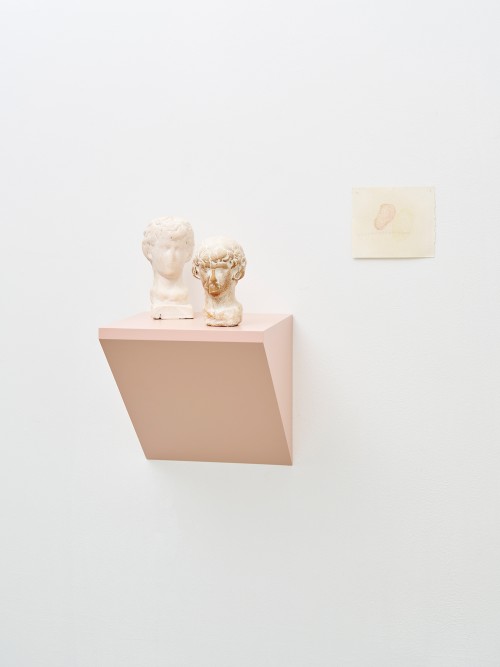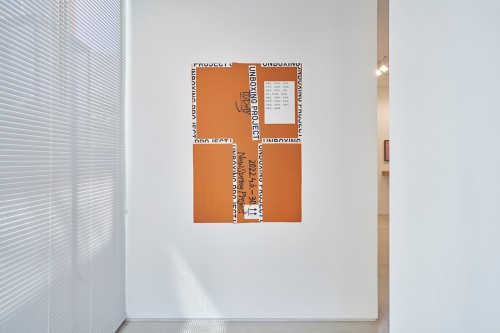
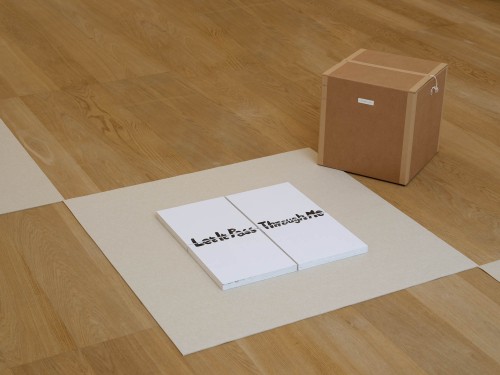
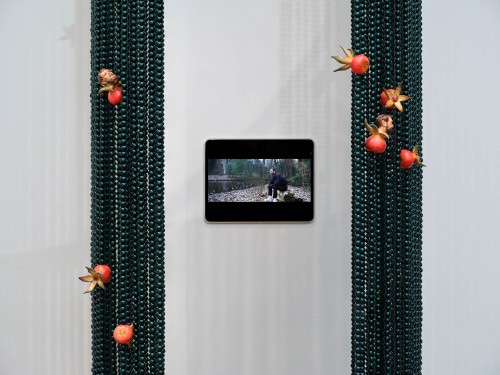
Unboxing project Unboxing project Unboxing project Unboxing project Unboxing project Unboxing project Unboxing project Unboxing project Unboxing project Unboxing project Unboxing project Unboxing project
EDiTiON

7. Generative Forms

EXHiBiTiON DATES
VENUE
PARTiCiPATiNG ARTiSTS
19 August – 10 October 2026 2026년 8월 19일 – 10월 10일
SONGEUN, Seoul 송은, 서울
Sungseok Ahn, Gyungsu An, Jungju An, Bae Yoon Hwan, Kyungho Baek, Ujin Baek, Hyongryol Bak, Miryung Barn, Jungki Beak, Bigo, Bomroya, Cha Ji Ryang, Hyelim Cha, Che Go Eun, Byungwang Cho, Cho Sung Ho, Jaiyoung Cho, Kyoungjae Cho, Omyo Cho, Sohee Cho, Youngjoo Cho, Byeongseok Choi, Choi Eun Jung, Eunkyung Choi, Goen Choi, Hakbo Choi, Jangwon Choi, Sun Choi, Taehoon Choi, Mirim Chu, Heemin Chung, Soyoung Chung, Younghan Chung, goyoson, Minja Gu, GuNa, Tae-Bum Ha, Jeesun Hahn, Anna Han, Han & Mona, Han Sungpil, Hyoseok Han, Kyungwoo Han, Yeonhwa Hur, Sunjeong Hwang, Wonhae Hwang, Boyun Jang, Jang Pa, Jongwan Jang, Hyunsun Jeon, Shindeok Jeon, Boyoung Jeong, Jinyong Jeong, Kahee Jeong, Kihoon Jeong, Sophie Jeong, Yongkook Jeong, Minwook Jin, Bokyung Jun, Hye Joo Jun, Hyerim Jun, Jangyeun Jun, Sojung Jun, Jihyun Jung, Jung Jin, Jung kyoung hee, Rina Kang, Jiyoung Keem, Youngle Keem, Daum Kim, Eun Hyung Kim, Hansaem Kim, Heejeong Kim, Hoonida Kim, Hyunseok Kim, Inbai Kim, Jeesoo Kim, Ji Eun Kim, Jihyun Kim, Ju Hwan Kim, Jungsun Kim, Juree Kim, Juwon Kim, Kim Jipyeong, KIM Woojin, Kim Yeon Kyu, Kim, JiÉh, Minjung Kim, Muyeong Kim, Sejin Kim, Wonhwa Kim, Young-Hun Kim, YoungEun Kim, Ko Suk Won, Youngchan Ko, Jaewook Koh, Jamyoung Koo, Ahram Kwon, Hyewon Kwon, Hyunbhin Kwon, Junho Kwon, Annie Lee, Aram Lee, Changhoon Lee, Eun Yeoung Lee, Eunsil Lee, Eunsook Lee, Eunu Lee, Heejoon Lee, Hyein Lee, Jade Sujin Lee, Jinhyung Lee, Jinju Lee, Junghee Lee, Kanghwa Lee, Kangwook Lee, Ke-Won Lee, Kwangkee Lee, Lee Jae Hoon, Lee Jun Koo, Lee Sejun, Lee Seung-hyun, Seung Ae Lee, Sooji Lee, Soyoung Lee, Sungjae Lee, Sunmin Lee, Uesung Lee, Wonchul Lee, Wonho Lee, Nosik Lim, MIOON, Isaac Moon, Nam Kyung Min, Jun Noh, Sangho Noh, Jong Oh, Min Oh, Sangtaek Oh, Ohm Jung-Ho, Jongkwan Paik, Rahm Parc, Bona Park, Chan Yong Park, Grim Park, Hyungjin Park, Jaewoong Park, Jahyun Park, Jonggab Park, Jongyoung Park, Junebum Park, Park Hyesoo, Park Kyung Ryul, Wunggyu Park, Yunju Park, Jaye Rhee, Eunjoo Rho, Yo-E Ryou, Ahyeon Ryu, Ryu Ji Sun, Seo Hae-young, Seo Si hwan, Jehyun Shin, Shin Mi-jung, Shin Min, Raejung Sim, Ifie Sin, Donghyun Son, Hyekyung Son, Myungjin Song, Yoonhee Ryoony Suh, Young-jun Tak, Jeongsu Woo, Yaloo, Yang Dae-Won, Hwasoo Yoo, Bohyun Yoon, JeongMee Yoon, Jeong-ui Yun 강리나, 고석원, 고영찬, 고요손, 고재욱, 구나, 구민자, 구자명, 권아람, 권준호, 권현빈, 권혜원, 김다움, 김무영, 김민정, 김세진, 김연규, 김영글, 김영은, 김영훈, 김우진, 김원화, 김은형, 김인배, 김정선, 김주리, 김주원, 김주환, 김지수, 김지애, 김지영, 김지은, 김지평, 김지현, 김한샘, 김현석, 김희정, 후니다 킴, 남경민, 노상호, 노은주, 노준, 류지선, 문이삭, 뮌, 박경률, 박그림, 박보나, 박아람, 박웅규, 박윤주, 박자현, 박재웅, 박종갑, 박종영, 박준범, 박찬용, 박형렬, 박형진, 박혜수, 반미령, 배윤환, 백경호, 백우진, 백정기, 백종관, 봄로야, 비고, 서시환, 서윤희, 서해영, 손동현, 손혜경, 송명진, 신미정, 신민, 신이피, 신제현, 심래정, 안경수, 안성석, 안정주, 애나한, 얄루, 양대원, 엄정호, 오묘초, 오민, 오상택, 오종, 요이, 우정수, 유아연, 유화수, 윤보현, 윤정미, 윤정의, 이강욱, 이강화, 이계원, 이광기, 이선민, 이세준, 이소영, 이수지, 이수진, 이승애, 이승재, 이승현, 이아람, 이원철, 이원호, 이은숙, 이은실, 이은영, 이은우, 이의성, 이재이, 이재훈, 이정희, 이주연, 이준구, 이진주, 이진형, 이창훈, 이혜인, 이희준, 임노식, 장보윤, 장종완, 장파, 전보경, 전소정, 전신덕, 전장연, 전현선, 전혜림, 전혜주, 정가희, 정경희, 정기훈, 정보영, 정서희, 정소영, 정영한, 정용국, 정지현, 정진, 정진용, 정희민, 조경재, 조병왕, 조성호, 조소희, 조영주, 조재영, 진민욱, 차지량, 차혜림, 최고은(Che Go Eun), 최고은(Goen Choi), 최병석, 최선, 최은경, 최은정, 최장원, 최태훈, 최학보, 추미림, 탁영준, 하태범, 한 & 모나, 한경우, 한성필, 한지선, 한효석, 허연화, 황선정, 황원해

SONGEUN is pleased to present SONGEUN × Unboxing Project: Generative Forms, a large-scale group exhibition bringing together 179 artists and collectives who have received awards or been shortlisted for the SONGEUN Art Award since its establishment. On view from August 19 to October 10, 2026, the exhibition marks the twenty-fifth anniversary of the Award. Established in 2001 by Chairman Yoo Sang-deok in honor of the legacy of the late Yoo Sung-yeon (pen name: SongEun, 1917–1999), founder of the SONGEUN Art and Cultural Foundation, the Award has played a significant role in supporting emerging artists and contributing to a more diverse and evolving landscape of contemporary art in Korea. Generative Forms revisits this history not as a retrospective survey but as a living constellation of practices that have developed alongside the Award over the past twenty-five years.

To bring such a wide range of artistic positions into dialogue, the exhibition is organized in collaboration with the Unboxing Project (UBP). Founded in 2022, UBP has enacted a curatorial model that commissions new works through a shared framework—defined by a given theme and delivered in a box. Rather than functioning as a limitation, the constrained format operates as a catalyst, highlighting individual artistic practices while revealing how a common premise can be reconfigured across divergent conceptual and material approaches.

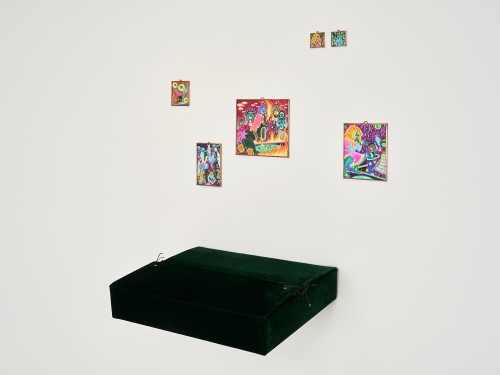
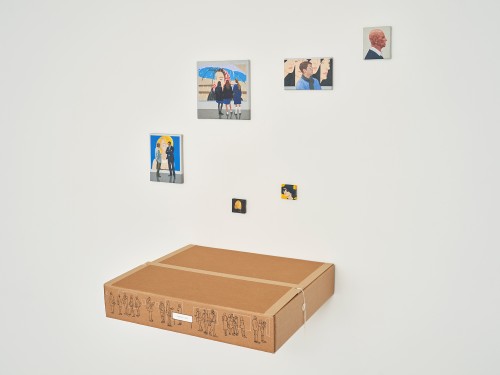
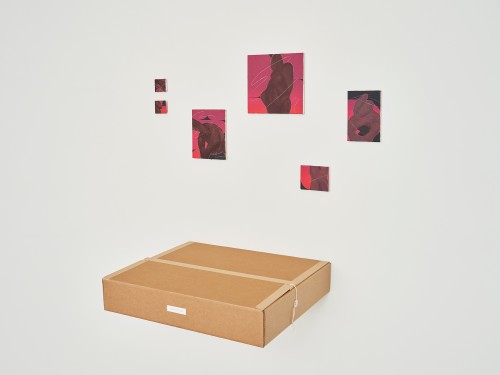
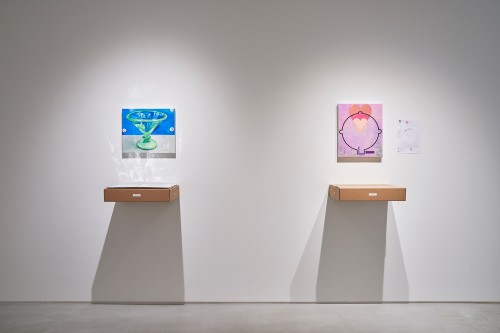
For SONGEUN × Unboxing Project: Generative Forms, each participating artist received a conceptual prompt—the word “generative,” drawn from the exhibition title—together with a physical one: a box containing four plywood panels measuring 25 × 25 cm, a format chosen to mark the Award’s twenty-fifth anniversary. From these givens, each artist was commissioned to produce a new work. The notion of the “generative” evokes a present in which artificial intelligence (AI) has become part of everyday life, while also serving as a cue for artists to reflect on how their practices have developed since their participation in the Award. Across painting, photography, sculpture, installation, media, and performance, the identical physical condition is interpreted fluidly—as support, as material, as structure.

While every work departs from the same framework, the underlying concepts, relationships, and formal approaches branch and vary organically, shaped by each artist's practice. Spanning a breadth of media, the works reinterpret the given format in their own languages, expanding into distinct meanings, materials, sensibilities, structures, and modes of performance.

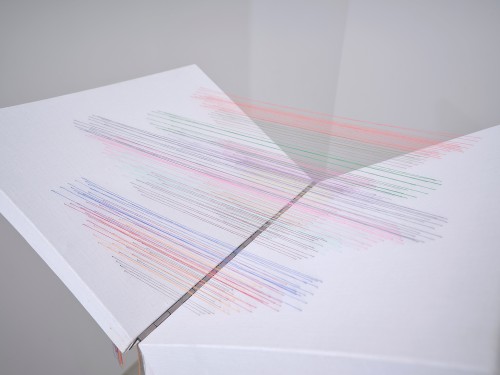
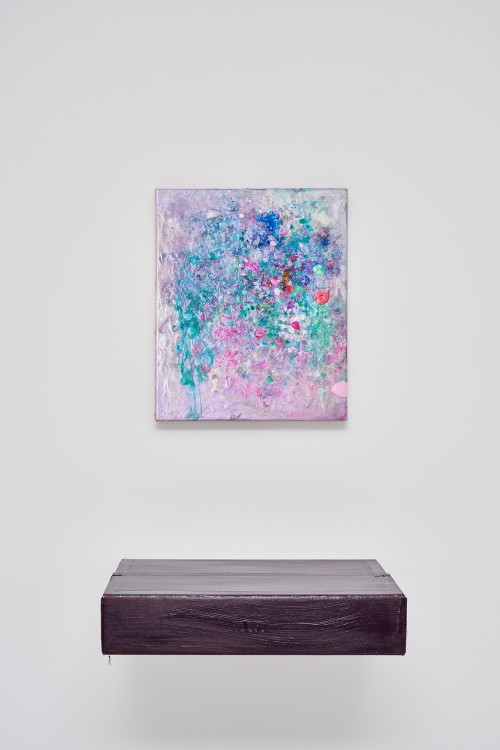
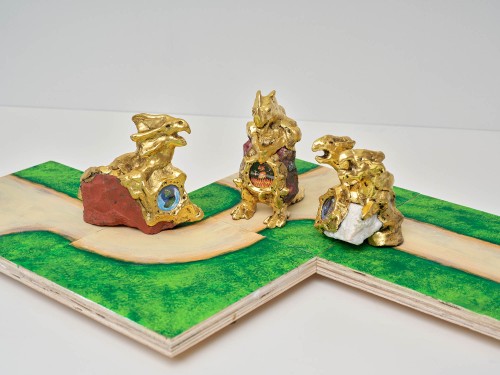
GuNa assembled four plywood panels into a single surface, cut them into irregular contours, and applied translucent resin and FRP putty to transform the work’s structure and texture, before adding oil paint. Through the contrast between its warped form and material qualities, the work presents a sense in which solidity and fragility coexist. Jinju Lee mounts the provided plywood panels onto a frame whose face juts out at a different angle on each side, composing paintings that vary in height and orientation. Set off the wall rather than parallel to it, the work shifts in form and relation as viewers move around it, drawing them into a more active engagement with the narrative fragments scattered across its surface and prompting them to construct a story of their own. Jongwan Jang reinterprets chochungdo, the traditional folk-painting genre that once found meaning in small plants and insects, for the present day; connecting plywood panels bearing these motifs with tree branches and stacking them upward, he forms a forest-like structure that embodies a quiet harmony with nature. Rahm Parc recalls her earlier painting to construct a three-dimensional form folded at a wall corner, proposing a new pictorial architecture in which color, space, and viewer perception intersect.

In photography and the moving image, the given framework becomes a means of examining how image and structure guide perception. Junebum Park’s 8 Languages (2026) reconfigures Puzzle (2015), compressing the original four-channel video into four still images and inviting viewers to imagine the various possibilities of variation opened up by the fixed frame. Han Sungpil similarly compresses and reconfigures a large-scale façade project into a small format, carrying the gap and tension between original and reproduction into a new register. Hyewon Kwon’s Synthetic Obscura (2026) sets LCD footage within a plywood camera obscura to consider the relations among human vision, optical apparatus, and the perception of nature, and Jehyun Shin combines video, sound, and sculptural elements in a research-based installation on plywood that layers time, site, and sensory register.

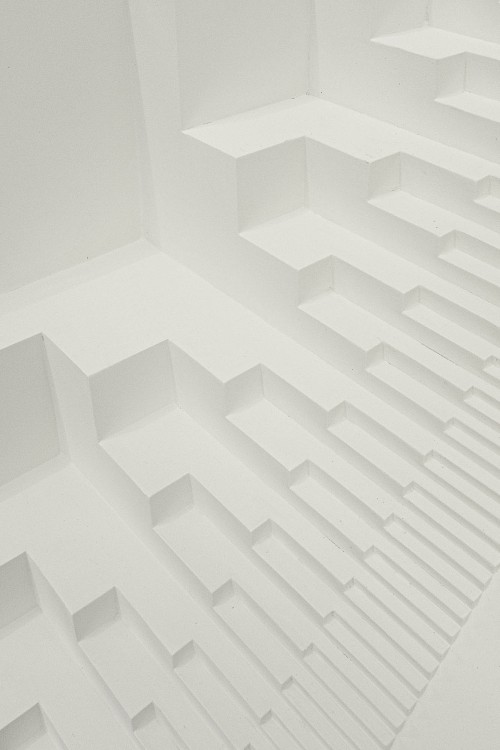
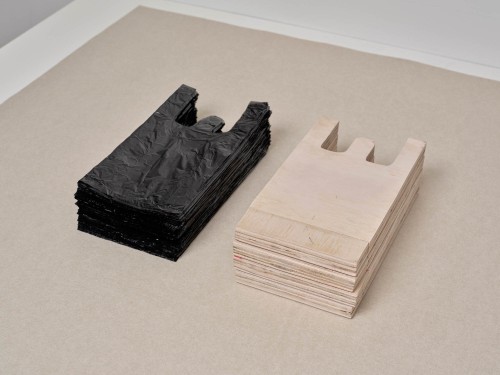
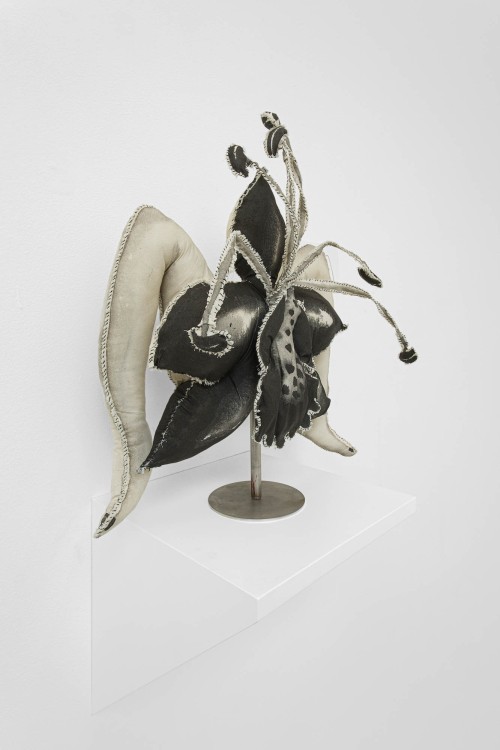
In sculpture and installation, the plywood panels are subjected to physical transformation or drawn into performative processes. Bona Park’s Outside (2026) grinds the four panels and reconstitutes them into a spherical sculpture, recasting what was once a support as sculptural subject, while Park Hyesoo’s Yeongkkeul: Sealed House (2026) uses plywood formwork and shredded banknotes to give shape to the structure of a house, registering the social anxieties embedded in collective housing and the family unit. Shin Min stacks plywood panels to build a staircase, Stairs of NO (2026), embodying the social passage women are compelled to climb. Jong Oh visualizes the passage of point, line, and plane into space through drawn marks and painted planes on plywood, capturing otherwise unseen relations at the moment of their formation, and goyoson embraces the processes of transport and installation into the work itself, attending to transformation and relational duration rather than a fixed, finished state, through a sculpture that continues to change as it passes through many hands.

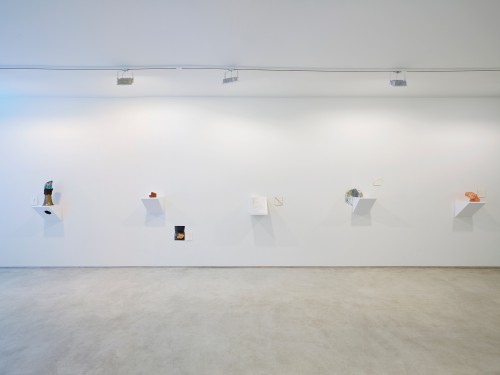
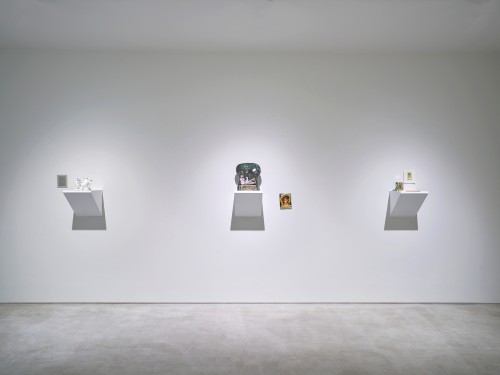
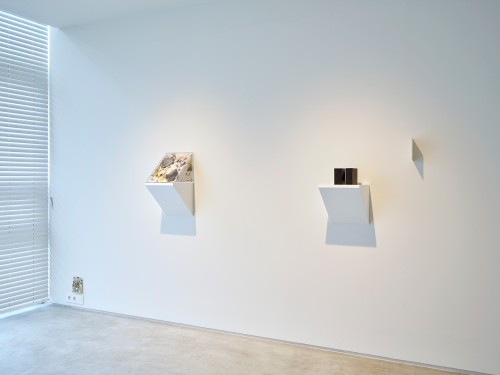
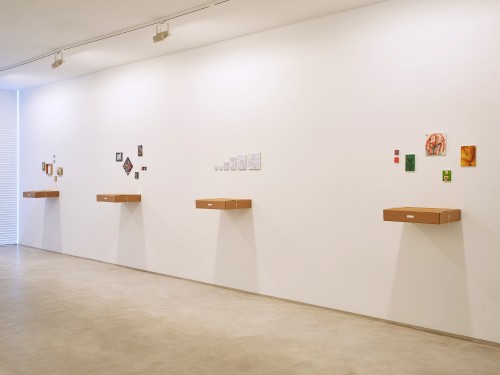
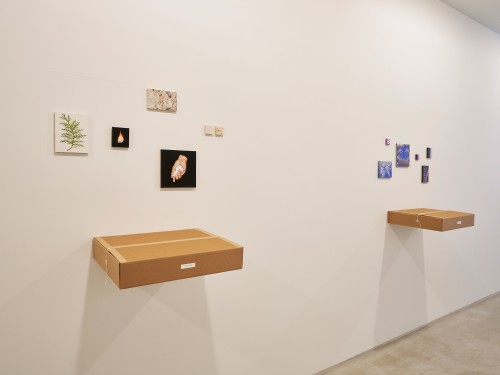
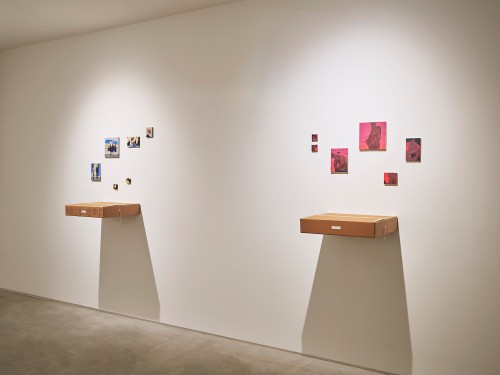
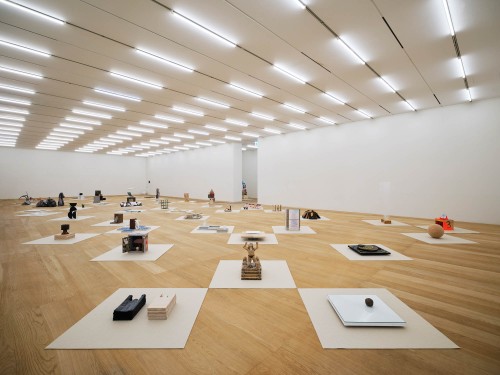
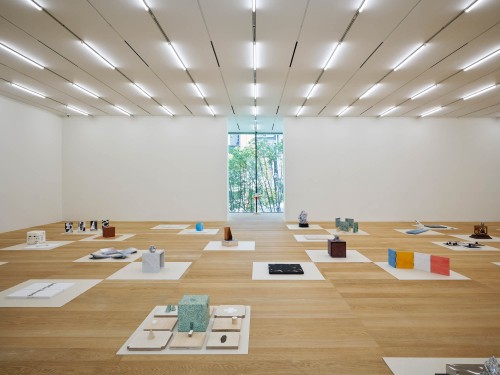
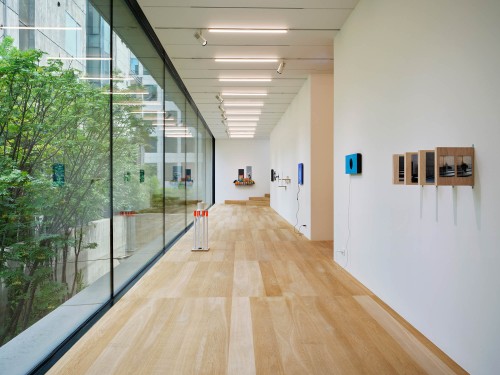
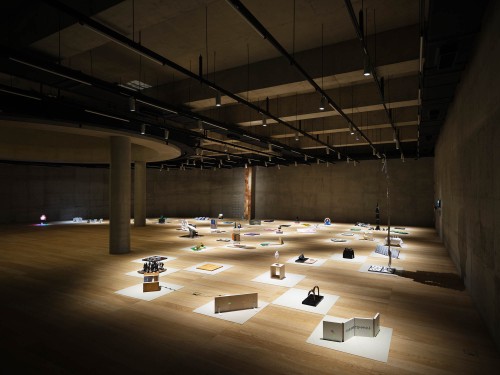
The exhibition further departs from the convention of wall-mounted display, staging much of the work on the floor in an unconventional spatial arrangement. Each artist’s allotted space is delineated in beige felt, drawing the viewer’s gaze downward and sharpening focus on individual pieces. At the same time, select works occupy wall corners, hang from the ceiling, or mount directly on the wall, ensuring that the context surrounding each piece remains legible and that every artist’s work can be experienced in its own right.

SONGEUN × Unboxing Project: Generative Forms reveals the multilayered generative structure of contemporary art through the work of 179 artists and collectives who, while sharing a single format and condition, have moved in markedly different directions. Setting out from the same conceptual and physical framework, the works take on forms of their own according to differing understandings and sensibilities, materials and formats, attitudes and approaches, unfolding the artistic trajectories of the participants in full. The “generative” of the title, moreover, signifies more than the making of new forms. In art history, the term has designated—within systems-based practices—not a single, finished outcome but the rules, conditions, and systems that continually yield multiple results. The exhibition regards the support structure the SONGEUN Art Award has built over twenty-five years as itself a generative platform—a testament to what such sustained commitment can produce: not only a body of work, but an ecosystem in which practices accumulate, intersect, and generate something larger than the sum of their parts.

2026년 8월 19일부터 10월 10일까지 복합문화공간 송은에서는 역대 송은미술대상 수상 및 본선 진출 작가 179 명/팀이 참여하는 대규모 그룹전 《송은 × 언박싱 프로젝트: 생성적 형상들》이 열린다. 이번 전시는 젊은 작가를 발굴·후원하며 한국 동시대 미술의 중요한 축을 이루어온 송은미술대상 25주년을 기념해 마련되었다. 송은미술대상은 재단 설립자 故 송은 유성연(1917–1999) 명예회장의 한국미술 발전을 위한 뜻을 기리고자 유상덕 회장이 2001년 제정한 미술상이다.

《송은 × 언박싱 프로젝트: 생성적 형상들》은 지난 25년간 송은미술대상과 함께 성장해온 작가들의 예술적 여정을 동시대적 시점에서 재조명하며 이들이 구축해온 다양한 실천의 형상을 조망한다. 전시는 다수의 작가를 유기적으로 아우르기 위해 언박싱 프로젝트(UBP)와의 협업으로 기획되었다. 2022년 시작된 UBP는 주제에 따른 특정 형식의 틀이 담긴 박스를 작가에게 제공하고, 이를 바탕으로 신작을 커미션해온 전시 프로젝트이다. 제한된 형식은 개별 작가의 고유한 조형 언어를 극대화하는 장치로 작동하며 예술의 틀이 만들어내는 창작의 가능성을 탐색해왔다.

이번 전시에서는 개념적 틀로서 전시 제목의 ‘생성적(generative)’이라는 단어와, 물리적 틀로서 25주년을 상징하는 25 × 25 cm 크기 합판 네 장이 담긴 박스를 참여 작가에게 전달하고, 이를 활용한 신작 제작을 의뢰하였다. ‘생성적’이라는 개념은 AI의 활용이 일상화된 오늘의 시대성을 환기하는 동시에 미술상 참여 이후 작가들의 예술적 전개 과정을 반추하는 단서로 기능한다. 동일한 물리적 조건은 회화·사진·조각·설치·미디어·퍼포먼스 등 매체와 결합하여 작품의 지지체·재료·설치 구조 등으로 유동적으로 해석된다.

전시 작품은 동일한 틀에서 시작하지만 각 작가의 예술적 실천에 따라 개념과 관계, 조형 방식이 유기적으로 분기하고 변주된다. 여러 매체를 아우르는 작업들은 제한된 형식을 각자의 조형 언어로 재해석하며 서로 다른 의미와 물질·감각·구조·수행으로 확장된다.

구나는 네 개의 합판을 하나의 화면으로 이어붙인 뒤 불규칙하게 절단하고 반투명 레진과 FRP 퍼티로 구조와 질감을 변형한 위에 유화를 더해, 뒤틀린 형태와 물성의 대비 속에서 견고함과 취약함이 공존하는 감각을 제시한다. 이진주는 제공된 합판을 한쪽 면이 모두 다른 각도로 비스듬히 튀어나온 틀에 붙여 높낮이와 각도가 다른 회화를 구성한다. 벽과 평행하지 않게 돌출된 회화는 관객 위치에 따라 보이는 형상과 관계를 달라지게 하여 관객이 화면 위 서사의 파편들에 보다 적극적으로 개입해 스스로의 이야기를 만들도록 이끈다. 장종완은 작은 식물과 곤충에서도 의미를 찾은 전통 민화 ‘초충도(草蟲圖)’를 현대적으로 재해석하고, 그림이 그려진 합판을 나뭇가지로 연결해 쌓아 올려 ‘숲’ 같은 회화적 구조를 만들어 자연과의 조화를 구현한다. 박아람은 과거의 평면 회화를 소환해 합판을 벽 모서리에 맞춘 입체로 세우며 색과 공간, 관객의 지각이 교차하는 새로운 회화적 구조를 제시한다.

사진과 비디오 매체 작업에서는 제공된 틀을 활용해 이미지 및 구조가 촉진하는 인식의 전환을 들여다보는 시도가 이어진다. 박준범의 〈8개의 언어〉(2026)는 2015년작 〈퍼즐〉을 재구성해 4채널 영상을 4개의 스틸 이미지로 압축함으로써, 고정된 프레임이 열어놓는 다양한 변주 가능성을 상상하게 한다. 한성필은 대형 파사드 프로젝트를 소형으로 압축·재구성한 작품으로 원본과 재현 사이의 간극과 긴장을 새로운 차원으로 전개한다. 권혜원의 〈신세틱 옵스큐라〉(2026)는 합판으로 만든 카메라 옵스큐라 구조 안 LCD에 영상을 재생하며 인간의 시각과 기술적 장치, 자연 인식의 관계를 되짚고, 신제현은 영상·사운드·조각적 요소를 결합하여 합판 위 리서치 기반 설치를 만들어 시간과 장소, 감각의 층위를 겹쳐 놓는다.

한편 조각과 설치 작업은 합판이라는 물리적 조건 자체를 변형시키거나 이를 수행의 과정으로 연결한다. 박보나는 네 장의 합판을 분쇄해 구 형태의 조각으로 재구성함으로써 지지체였던 재료를 조형적 주체로 전환시키고, 박혜수의 〈영혼의 집〉(2026)은‘분쇄된 1만 원권을 합판 거푸집에 찍어 만든 육면체를 통해 ‘집’의 상징적 가치를 물리적 형상으로 전환하고, 획일화된 집합주택과 내 집 마련의 꿈을 환기한다. 신민은 합판을 쌓아 여성에게 강요되는 사회적 이동 통로로서의 ‘계단’을 구현한 〈거절의 계단〉(2026)을 선보이고, 오종은 합판 위에 그린 점과 선, 채색된 면으로 점·선·면이 공간으로 전이되는 과정을 시각화하며 보이지 않던 관계와 그 형성의 순간을 포착한다. 고요손은 운송·설치의 과정을 작업 안으로 끌어들여 여러 관계자의 손을 거치며 변모하는 조각으로 작품의 완결보다 변형과 관계의 지속에 주목한다.

더불어 이번 전시는 작품을 벽면에 설치하는 전통적 방식에서 벗어나 대부분의 작업을 바닥에 배치하는 파격적인 공간 연출을 시도한다. 각 작가의 전시 공간을 연베이지색 펠트천으로 구획하고 해당 구역에 작품을 설치함으로써 관객의 시선을 바닥으로 유도해 개별 작품에 더욱 집중할 수 있게 한다. 동시에 작품의 맥락을 명확하게 전달하기 위해 벽 모서리, 천장에서 내려오는 설치, 벽면에 거는 형식 등을 병행하여 모든 작가의 작품이 오롯이 감상될 수 있도록 한다.

《송은 × 언박싱 프로젝트: 생성적 형상들》은 하나의 형식과 조건을 공유하면서도 각기 다른 방향으로 전개된 180여 명의 작업을 통해 동시대 미술의 다층적 생성 구조를 드러낸다. 같은 개념적·물리적 틀에서 출발한 작품들은 다양한 이해와 감각, 물질과 형식, 태도와 접근에 따라 변주되며 참여 작가들의 예술적 궤적을 입체적으로 펼쳐낸다. 더불어 전시 제목의 ‘생성적’은 단순히 새로운 형상을 만들어낸다는 의미를 넘어선다. 미술사적으로 이 용어는 시스템 기반의 예술 실천 속에서 하나의 완결된 결과물이 아니라 다양한 결과를 지속적으로 산출하는 규칙과 조건, 그리고 시스템을 의미해 왔다. 이러한 의미에서 이번 전시는 지난 25년간 송은미술대상이 구축해온 지원의 구조를 하나의 생성적 플랫폼으로 바라본다. 나아가 송은미술대상이 후원해온 작가들을 한자리에 모아 한국 동시대 미술이 쌓아온 시간과 변화의 흐름을 응축해 보여주며 미술상이 예술적 생태계에 기여해온 바를 가시화한다.

6. Reading

EXHiBiTiON DATES
VENUE
PARTiCiPATiNG ARTiSTS
October 23 – November 23, 2025 2025년 10월 23일 – 11월 23일
New Spring Project, Seoul 뉴스프링프로젝트, 서울
Choe Sooryeon, Jae-Eun Choi, gimhongsok, Han Jaeyeol, Eddie Kang, Keem Jiyoung, Kim Ahra, Joeun Kim Aatchim, Lee Jaesok, Lee Wonwoo, Mackerel Safranski, Noh Hansol, Jungwon Park, Park Minjoon, Rho Eunjoo, rowajeong, Shin Min, Sun Woo, Yi Soonjoo, Yoo Geun-Taek, Yoo Seungho 에디강, 고등어, 김아라, 김조은, 김지영, 김홍석, 노은주, 노한솔, 로와정, 박민준, 박정원, 신민, 유근택, 유승호, 이순주, 이원우, 이재석, 최수련, 최재은, 한선우, 한재열

"eading Between and Beyond Text and Image

“I like the idea of a word becoming a picture, almost leaving its body, then coming back and becoming a word again.[1]”

— Ed Ruscha

This exhibition takes as its point of departure a remark by Ed Ruscha: the idea of a word becoming a picture, momentarily shedding the body of its meaning, before returning to language once again. This cyclical movement—through which language is transformed into a visual object and meaning becomes layered and multiplied—encapsulates the conceptual premise of 《UNBOXING PROJECT: Reading》, an exhibition that examines text and image, reading and interpretation, and the spaces between and beyond them.

Language—and more specifically, written text—has long played a significant role in the history of painting. From hieroglyphs placed alongside images in ancient Egyptian murals for purposes of record and communication, biblical passages incorporated into medieval paintings, and East Asian munjado (文字圖), in which characters themselves were rendered pictorially, to René Magritte’s use of language detached from image to unsettle the limits of perception; from Lawrence Weiner and Jenny Holzer’s treatment of language itself as an artistic medium within Conceptual Art to Ruscha’s transformation of words into visual objects, text has never occupied merely the margins of art. It has entered the pictorial field, served as a medium in its own right, and generated fundamental questions about representation. Words may explain an image, precede it, or at times become images themselves.

Conceived around this relationship between text and image, the sixth edition of UBP, 《Reading》, brings together two acts of reading: reading an artwork and reading the words that appear within a painting. While written language provides a framework through which the world is understood, in art it exceeds its function as a tool of communication and becomes a medium capable of generating multiple layers of meaning. Within painting, text and image may converge or collide, producing new visual grammars. In this process, words extend beyond their literal meanings to activate emotion, memory, and context, drawing viewers into an ongoing process of interpretation. When language that cannot be readily deciphered begins to operate as abstract form, meaning is not so much blocked as opened onto another register. The viewer encounters not a single outcome of reading, but the very process through which interpretation is produced. 《Reading》 explores this fluid field of legibility, expanding the possibilities of encountering art across understanding, interpretation, and imagination.

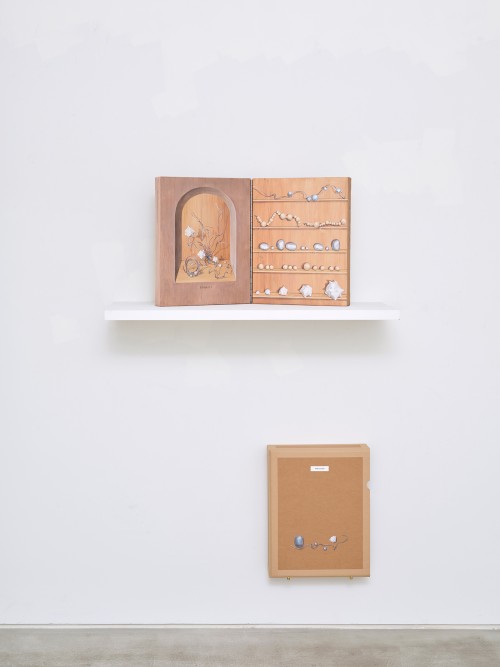
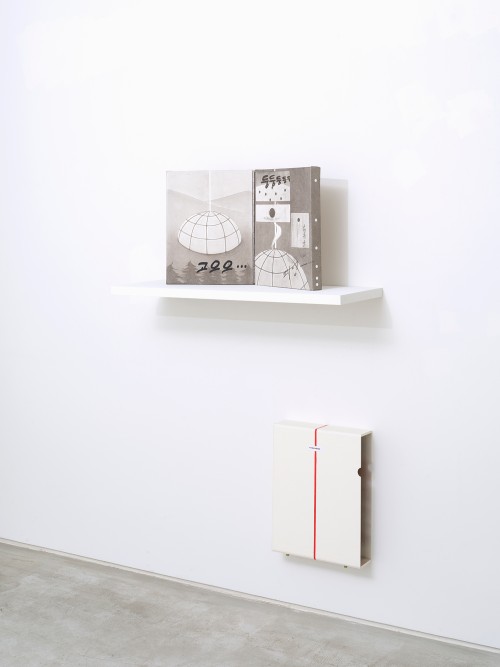
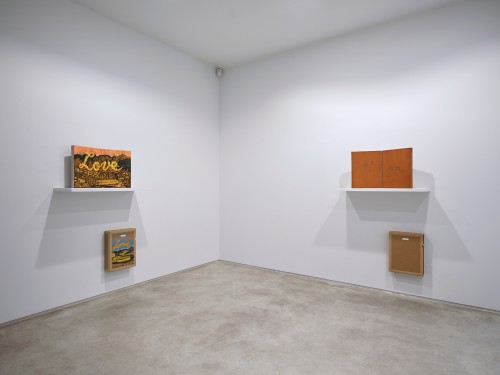
For the exhibition, the curator provided each participating artist with a diptych structure composed of two connected canvases. Opening and closing like a book, the format produces a dual perception of painting and book. More than a formal condition imposed by the exhibition, it functions as a device through which artists are invited to reconsider the relationship between text and image, experiment with the sensory and formal qualities of written language, and negotiate the tensions and layers of interpretation that emerge between them.

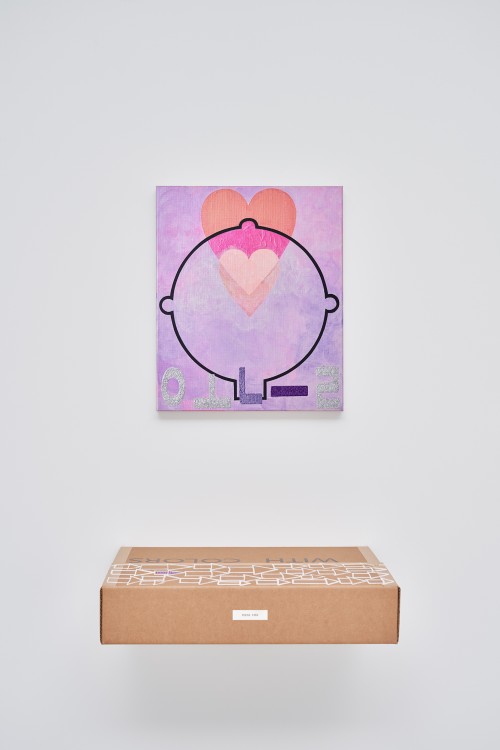
Working within this shared framework, the participating artists approach the relationship between text and image from multiple directions. Some translate the formal rhythm of written characters into pictorial composition, while others visualize the process of reading itself or draw attention to its social contexts. Ara Kim reconfigures the grid-like jeong (井) structure of traditional Korean architecture alongside letterforms from the Hunminjeongeum Haerye, questioning the underlying orders shared by language and structure. Seungho Yoo constructs a nonlinear “hypertext” field in which written characters and pointillist imagery overlap, exploring the dismantling and recombination of text and image. Soonjoo Lee uses two circles and hinges to form the Korean syllable “eung” (응), testing the point at which language shifts into abstract form, while Jaeyoul Han draws on social events behind familiar signs to reveal the inevitably partial nature of any act of reading.

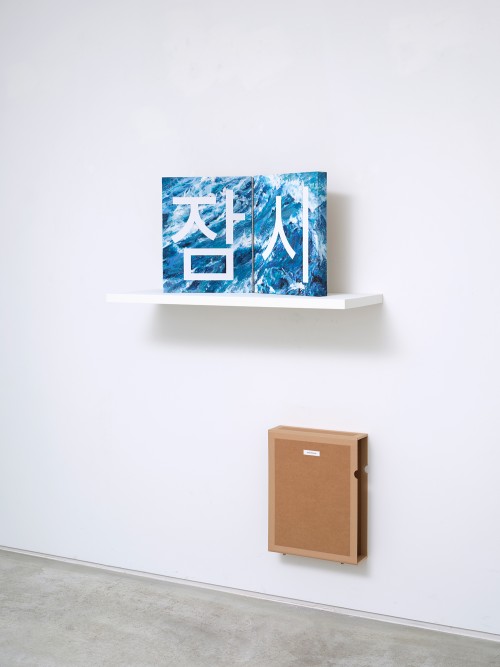
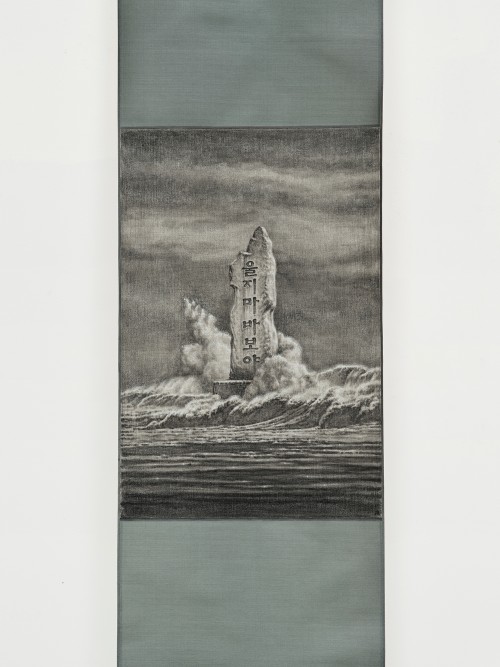
Other works foreground disjunctions between word and image, disrupting familiar habits of interpretation. Jiyoung Keem overlays the word Briefly onto turbulent waves, summoning a forgotten tragedy through language and confronting viewers with the tension produced between image and text. Hong Soku places the sentence “I think this text is a picture” alongside two figures who face and regard it, shifting between the acts of reading and looking while reconsidering the referential function of language. Eunju Noh translates prelinguistic vocalizations—the sounds of an infant’s babbling—into a graphic-score-like pictorial structure, rendering the sensory moment in which language begins to emerge.

Elsewhere, artist duo Rho Jae Oon and Jeong Hyun Suk reveals on the reverse of their canvases that an abstract structure woven from colored thread originates in the phrase “we are on the same page,” visualizing the varied mechanisms through which relationships are formed and maintained. Min Shin combines images and sentences in a new work resembling both a private scrapbook and an object, tracing the presence of lives erased within systems of capitalist labor. Rather than simply juxtaposing or mixing text and image, the participating artists extend their inquiry to the very act of “reading” itself.

The exhibition ultimately resists reducing text and image to a binary or supplementary relationship. Instead, it attends to the gaps and resonances that continuously emerge between them. Reading and interpretation, record and imagination, sign and form permeate one another, producing experiences that cannot be fixed into a single meaning. What 《Reading》 brings into view is precisely this multiplicity: an open field of reading.

The exhibition returns to a longstanding question—how should an artwork be read?—and poses it anew in the language of the present. Rather than offering an answer, it functions as a site for reformulating the question, examining how text and image interpret, overturn, and reconfigure one another within a structure that borrows the outward form of a book. Through this process, reading expands into both an act of perception and an act of relation, prompting us to look again at what has become familiar.

To read between and beyond text and image is also to reconsider how we relate to the world. 《Reading》 is therefore not simply the title of an exhibition, but an ongoing proposition: a way of learning the world through art, locating oneself within it, and continually interpreting and rewriting the possibilities of what might come next."

"텍스트와 이미지, 사이와 너머 읽기
“I like the idea of a word becoming a picture, almost leaving its body, then coming back and becoming a word again.[1]”
— Ed Ruscha

이 전시는 에드 루샤(Ed Ruscha)가 남긴 한 문장에서 출발한다. “하나의 단어가 그림으로 변하고, 마치 의미의 허물을 잠시 벗어났다 다시 그 단어로 돌아오는” 듯한 순환적 운동에 영감을 받은 기획자의 의도에서 비롯되었다. 언어가 시각적 오브제로 변환되고 의미를 다층화하는 이 과정은 문자와 이미지, 독해와 해석, 그리고 그 사이와 너머를 탐구하는 전시 «UNBOXING PROJECT: Reading (읽기)»의 개념을 압축적으로 드러낸다.
언어, 보다 구체적으로 말하자면, 문자는 미술사적으로 회화에서 중요한 역할을 해왔다. 고대 이집트 벽화에서 기록과 전달을 위해 이미지와 병치한 상형문자, 중세 회화 속 삽입된 성경 구절, 글자를 형상화해 그림처럼 다루었던 동양의 문자도(文字圖), 근대 이후 이미지와 분리된 언어를 사용해 인식의 경계를 확장시킨 르네 마그리트(René Magritte)의 회화, 개념미술의 흐름 속에서 언어 자체를 매체로 다룬 로렌스 위너(Lawrence Weiner)와 제니 홀처(Jenny Holzer), 그리고 앞서 언급한 것처럼 문자를 시각적 오브제로 전환시킨 에드 루샤의 작업에 이르기까지, 문자는 미술의 주변부가 아니라 화면에 자리하거나 매개로 활용되며 핵심적 질문을 던져왔다. 그렇게 문자는 그림을 설명하고, 때로는 그림보다 앞서며, 또 어떤 경우에는 스스로 이미지가 되기도 한다.

이러한 문자와 이미지의 관계를 바탕으로 기획된 여섯 번째 UBP 전시 «읽기»는 예술작품을 ‘읽는다’는 행위와 회화 속 문자를 ‘읽는다’는 행위를 교차시킨다. 문자는 세상을 이해하는 틀을 제공하지만, 예술에서는 단순한 의사소통의 도구를 넘어 다층적 의미를 환기하는 매개로 변모한다. 회화 속 문자와 이미지는 결합하거나 충돌하며 새로운 시각적 문법을 생성한다. 그 과정에서 문자는 본연의 의미를 넘어 감정과 기억, 맥락을 불러내며 관객을 끊임없는 해석의 연속으로 이끈다. 더불어 독해할 수 없는 문자가 추상적 조형으로 작동할 때, 의미는 차단되기보다 다른 차원으로 열리며 관객은 단일한 독해 결과가 아니라 해석이 생성되는 과정 자체를 경험하게 된다. «읽기»는 바로 이러한 유동적 독법의 지평을 탐구하며 이해와 해석, 상상을 넘나드는 예술 감상의 가능성을 확장한다.

이번 전시를 위해 기획자는 참여 작가들에게 두 개의 캔버스가 연결된 이면화(diptych) 형식의 구조를 제공하였다. 이 형식은 마치 한 권의 책처럼 펼쳐지고 닫히며 회화와 책이라는 이중적 인식을 불러일으키는 구조로서 단순한 전시 주제 제시를 넘어, 작가들이 문자와 이미지의 상관 관계를 재고하고, 문자의 감각적·조형적 특성을 실험하며, 그 사이의 긴장과 해석의 층위를 어떻게 구축할지 고민하도록 유도하는 장치이다.

참여 작가들은 이를 바탕으로 문자와 이미지의 관계를 다각도로 탐구한다. 어떤 이들은 문자의 조형적 리듬을 회화적 구성으로 전환하고, 또 다른 일부는 독해의 과정을 시각적으로 드러내거나 읽기의 사회적 맥락을 끌어들인다. 김아라는 전통 건축의 정(井)자 구조와 훈민정음의 문자 형상을 회화적 도형으로 재구성하며 언어와 구조의 근원적 질서를 되묻고, 유승호는 문자와 점묘적 이미지가 겹쳐지는 화면 속에서 비선형적으로 읽히는 ‘하이퍼텍스트’ 구조를 제시해 글과 그림의 해체와 재조합을 탐구한다. 이순주는 두 개의 원과 경첩이 만들어내는 ‘응’의 형상을 통해 언어가 추상적 조형으로 전환되는 과정을 실험하고, 한재열은 기호의 이면에 있는 사회적 사건을 소환하며 ‘읽기’는 언제나 불완전한 인식에 머문다는 사실을 드러낸다. 또 다른 작품들은 문자와 이미지의 불일치를 강조하며 익숙한 해석의 습관에 균열을 낸다. 김지영은 거친 파도 위에 겹쳐진 ‘잠시’라는 단어를 통해 망각된 비극을 언어로 호출하며 이미지와 텍스트가 빚어내는 긴장을 직시하게 하고, 김홍석은 ‘나는 이 글이 그림이라고 생각합니다’라는 문장과 이를 응시하는 두 인물을 화면에 배치해 ‘읽기’와 ‘보기’의 전환을 실험하며 언어의 지시적 기능을 재고하게 한다. 노은주는 아기의 옹알이 같은 ‘말 이전의 말’을 그래픽 악보처럼 옮겨 언어가 태동하는 감각적 순간을 회화로 번역한다.

한편, 로와정은 색실을 엮어 만든 추상적 구조가 ‘we are on the same page’라는 문장에서 비롯됨을 캔버스 뒷면에서 드러내며 관계의 다양한 작동 원리를 시각화하고, 신민은 이미지와 문장을 엮은 신작을 통해 마치 작가의 사적 스크랩북이자 오브제처럼 구성된 장면을 보이며 자본주의 사회 시스템 속 지워진 존재들의 자취를 드러낸다. 이처럼 참여 작가들은 문자와 이미지를 단순히 병치하거나 혼합하는 데 그치지 않고, ‘읽기’라는 행위 자체를 확장된 차원에서 질문한다.

결국 이번 전시는 문자와 이미지를 단순히 대립이나 보조의 관계로 환원하지 않고, 그 사이에서 끊임없이 파생되는 의미의 틈과 울림에 주목한다. 독해와 해석, 기록과 상상, 기호와 형상은 서로를 침투하며 단일한 의미로 고정될 수 없는 다채로운 경험을 만든다. «읽기»가 드러내고자 하는 것은 바로 그 다층성, ‘읽기’의 열린 장이다.

이번 전시는 ‘미술작품은 어떻게 읽어야 하는가?’라는 오래된 질문을 오늘의 언어로 다시 불러낸다. 해답을 제시하기보다 질문을 새롭게 던지는 장으로 기능하며, 책의 외연을 차용한 구조 속에서 문자와 이미지가 서로를 해석하고 전복하며 재구성되는 과정을 탐구한다. 이러한 과정은 ‘읽기’를 지각의 행위이자 관계 맺기의 행위로 확장시키며, 익숙한 것을 낯설게 바라보게 한다. 그 사이와 너머를 읽어내는 행위를 통해 우리는 세계와 맺는 관계를 다시 사유하게 된다. «읽기»는 단순한 전시 제목이 아니라, 예술로 세계를 배우고 자신을 발견하며 나아가 새로운 세계의 가능성을 해석하고 다시 써 내려가는, 멈추지 않는 문장이다."

5. Message

EXHiBiTiON DATES
VENUE
PARTiCiPATiNG ARTiSTS
March 20 – April 12, 2025 2025년 3월 20일 – 4월 12일
Koenig Telegraphenamt, Berlin 쾨니히 텔레그라픈암트, 베를린
Jisan Ahn, Kyuchul Ahn, Yoonhee Choi, Kyungah Ham, Jongwan Jang, JungJin, Jiyoung Keem, Suyoung Kim, Eunsil Lee, Leehaiminsun, Maia Ruth Lee, Seulgi Lee, Nosik Lim, Sungsic Moon, Joung-ki Min, Grim Park, Gwangsoo Park, Jina Park, Rim Park, Yaerim Ryu, Neung Kyung Sung, Yun-hee Toh 김수영, 김지영, 도윤희, 문성식, 민정기, 박광수, 박그림, 박예림, 박진아, 성능경, 안규철, 안지산, 유예림, 마이아 루스 리, 이슬기, 이은실, 이해민선, 임노식, 장종완, 정진, 최윤희, 함경아

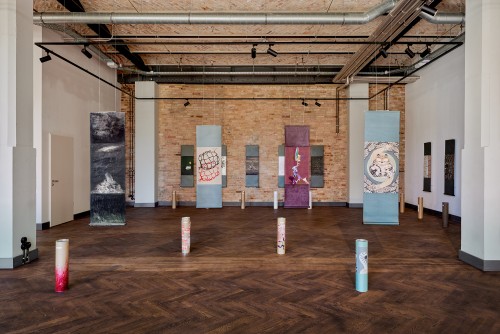
Situated at KÖNIG TELEGRAPHENAMT, the former main telegraph office in Berlin from its establishment in 1916 until its closure in 1999, UNBOXING PROJECT 4: Message aims to convey the messages of twenty-two participating artists connecting between different times, spaces, cultures, and narratives. The telegraphenamt once stood as a symbol of cutting-edge telegraph technology, featuring the latest machines of its era, including transmitting and receiving apparatus, a compressor, and a switchboard for a pneumatic post, known as Rohrpost in German. During its heyday, the pneumatic tube network in Berlin reached its pinnacle, covering an extensive route of almost 400 km in the 1940s and remained in operation until 1963 in West Berlin and 1976 in East Berlin. Despite its historical significance as a symbol of modern messaging technology, pneumatic post now rests in the annals of the past. In resonance with this history, UNBOXING PROJECT 4 sheds light on the meaning of communication and connection through the new artworks for the exhibition.

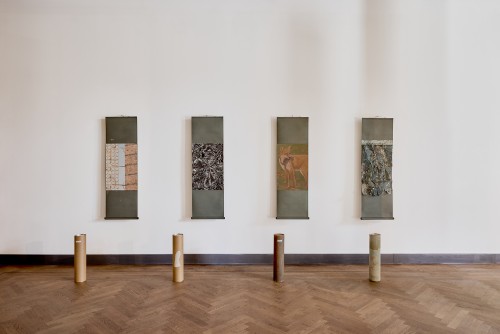
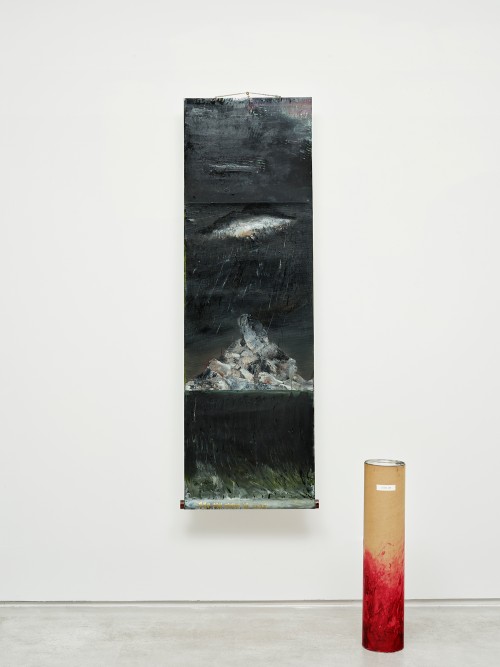
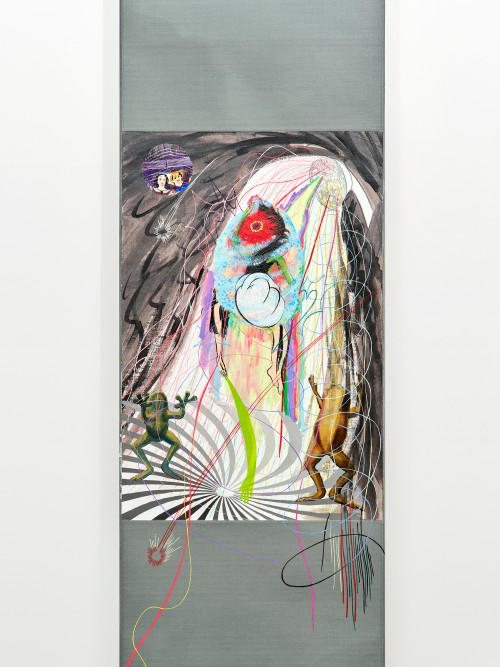
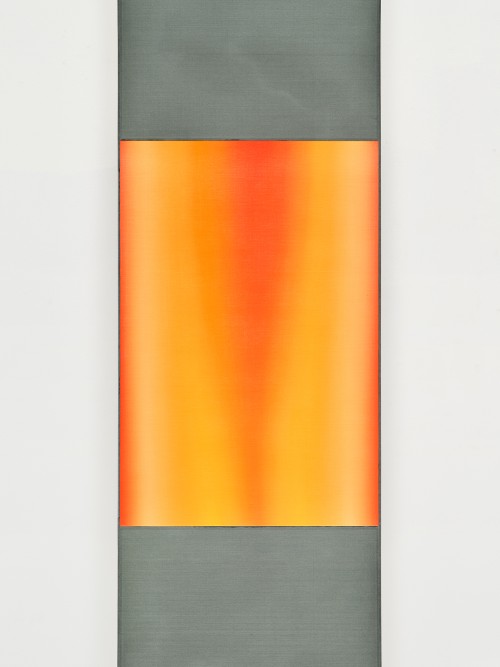
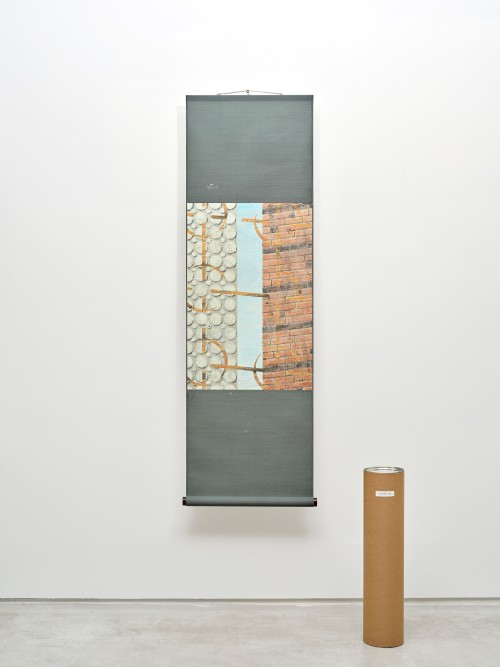
The exhibition commissions the participating artists to create new works within a specific framework, questioning how art connects the past and present, how content varies and evolves when the message delivery system changes, and what art can convey to the future. Concerning the framework, it devises and provides the artists a hanging scroll, which contains 60 × 34 cm canvas, in a cylinder-shaped box appropriated from the historical pneumatic tube box. Beyond bridging centuries, it traverses diverse cultures by adopting the traditional presentation of East Asian painting and calligraphy in a modern context. Not only functions as a frame for artwork but also the format of hanging scroll traditionally used for delivering letters. With the framework intersecting diverse times, spaces, and cultures, the exhibition challenges the artists to represent their visions and messages for the future using a format from the past. Furthermore, it seeks to examine how the framing of an exhibition influences representation, paradoxically emphasizing each artist’s distinctive practice within the limited framework.

Curated by Hyunjoo Byeon and Minjin Chae, UNBOXING PROJECT presented its inaugural exhibition in 2022. Inspired by the enduring impact of small-sized artworks, which often evoke empathy rather than mere admiration unlike large-scale or spectacular works, the project aims to encapsulate the essence of an artist’s practice within a compact and mobile format. Providing participating artists with a specially crafted framework, such as small canvases and plinths within a portable box, the project commissions them to create new works resonating with the theme of each project. These artworks are then unveiled and exhibited. Following its three editions held in Seoul and one in Los Angeles, UNBOXING PROJECT is invited by KÖNIG Galerie in Berlin for its fifth edition with the specially devised cylinder-shaped box for the special context of the venue.

“I found I could say things with color and shapes that I couldn’t say any other way
– things I had no words for.”
Georgia O’Keeffe

베를린의 옛 중앙 전신국이었던 KÖNIG TELEGRAPHENAMT에서 열리는 《UNBOXING PROJECT 4: Message》는 서로 다른 시간과 장소, 문화, 이야기를 연결하는 22명의 참여 작가들의 메시지를 전달하기 위해 기획되었습니다. 전신국은 한때 독일의 최신 전신 기술의 상징으로서 로어포스트(Rohrpost)로 알려진 공압우편의 전송 및 수신 장치, 압축기, 스위치보드 등 당시의 최신 기계를 갖춘 시설이었습니다. 전성기인 1940년대 베를린 공압관 네트워크는 약 400km에 달하는 경로관을 가지고 있었고, 서베를린에서는 1963년까지, 동베를린에서는 1976년까지 운영되었습니다. 과거 메시지 전달 기술의 상징이었으나 이제 공압우편은 유물로 남아 있습니다. 소통을 위한 인류의 끊임없는 역사적 노력에서 영감을 받아 《UNBOXING PROJECT 4: Message》는 예술이 시대를 초월하며 전달하는 메시지와 연결의 의미를 새로운 예술작품으로 조망하려 합니다.

이번 전시는 참여 작가에게 공압우편 형식에 조응하는 특정한 틀 내에서 새로운 작품을 제작하도록 의뢰하며, 예술이 과거와 현재를 어떻게 연결하는지, 메시지 전달 시스템 및 형식이 변화할 때 전달하는 내용은 어떻게 달라지고 진화하는지, 예술이 미래 세대에 무엇을 전달할 수 있는지를 질문합니다. 참여 작가에게 전달하는 틀은 공압우편의 케이스와 유사한 형태의 원통 케이스에 들어갈 수 있는 두루마리 족자 형식이고, 그 위에 부착한 60 × 34 cm 크기의 캔버스로 구성되어 있습니다. 이는 전통적 동아시아 회화의 표현 방식을 현대적 맥락에서 재해석해 시대는 물론 서로 다른 문화를 연결합니다. 더불어 족자는 과거 예술작품의 틀로 기능할 뿐 아니라 편지를 전달하는 데 사용된 형식이기도 합니다. 전시를 위해 시간과 장소, 문화를 결합해 고안한 틀을 제공하며 참여 작가에게 과거에서 기인된 형식 내 미래에 대한 비전과 메시지를 표현하도록 제안합니다. 더 나아가 전시의 틀이 예술 재현에 어떠한 영향을 미치는지를 탐구하며, 제한된 틀에서 역설적으로 개별 작가의 독창적인 예술 실천을 강조합니다.

2022년 첫 전시 이후 다섯 번째를 맞이하는 〈언박싱 프로젝트〉는 큐레이터 변현주와 아트 어드바이저 채민진이 압도적 크기의 작품이나 스펙터클이 주는 감탄보다 작은 작품이 전하는 감동이 때로는 더 오래, 더 깊이 각인되었던 경험을 반추하며 시작하였고, 작은 박스에 들어가는 크기의 커미션 작품을 선보입니다. 참여 작가에게 각 프로젝트의 주제에 부응하는 작업을 특정한 틀에 맞게 제작하길 의뢰하며 전달하고, 작가가 만든 작품을 받아 언박싱해 전시합니다. 〈언박싱 프로젝트〉는 예술의 물리적 이동성을 전시 프로세스 전면에 드러내고 제한된 틀 안에서 만들어진 작업을 통해 개별 작가의 서로 다른 예술적 실천을 보다 강조하며 전시 체계에 대해 질문을 던지는 큐레토리얼 시도이기도 합니다. 베를린의 KÖNIG Galerie가 초대해 열리는 이번 에디션에서는 전시 장소의 역사성과 예술의 연결성을 결합한 새로운 예술작품을 전시하고자 합니다.

3.2. Maquette

EXHiBiTiON DATES
VENUE
PARTiCiPATiNG ARTiSTS
2 November– 15 December 2024 2024년 11월 2일 – 12월 15일
Various Small Fires, Los Angeles Various Small Fires, Los Angeles
Sla Cha, Jaiyoung Cho, Goen Choi, Haneyl Choi, Soyoung Chung, Sunpil Don, Gimhongsok, Gwon
Osang, Kyungwoo Han, Sang A Han, Jungyoon Hyen, Jiieh G Hur, Byoungho Kim, Hansaem Kim, Inbai
Kim, Kim Yun Shin, Ahnnlee Lee, Hyunsoo Lee, Eunu Lee, Eun Yeoung Lee
권오상, 김병호, 김윤신, 김인배, 김한샘, 김홍석, 돈선필, 문이삭, 신미경, 양정욱, 오종, 이동훈, 이수경, 이원우, 이은영, 이은우, 이안리, 이현수, 임충섭, 정소영, 조재영, 차슬아, 최고은, 최하늘, 한경우, 한상아, 허지혜, 현정윤

“The most important sculptures of all civilizations are rather small. Almost all of them.”
— Alberto Giacometti (1942–1945)

Various Small Fires (VSF) proudly presents the fourth edition of THE UNBOXING PROJECT, an iterative curatorial project by Hyunjoo Byeon and Minjin Chae started in 2022. This exhibition brings together some of the most well-known and emerging voices in Korean contemporary art and is the American debut for many. In total, twenty-eight artists between the ages of thirty-three and eighty-nine made work for this project in response to a single prompt by the curators.

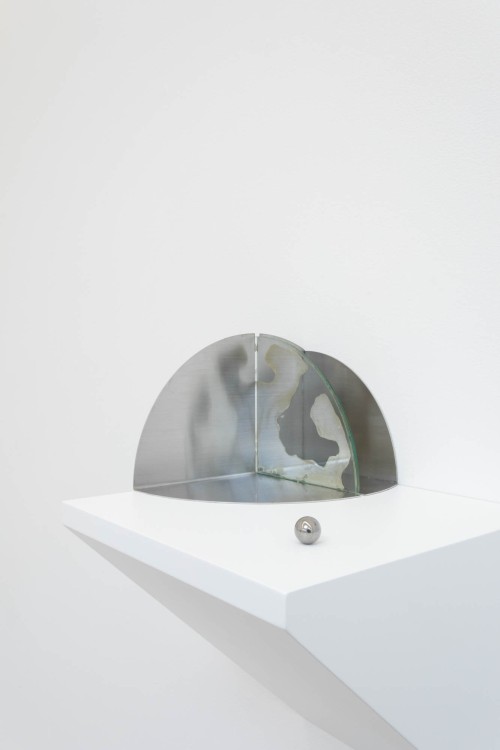
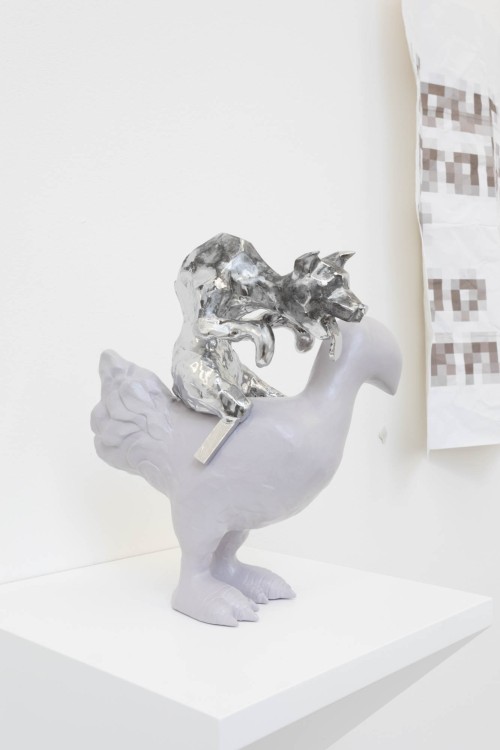
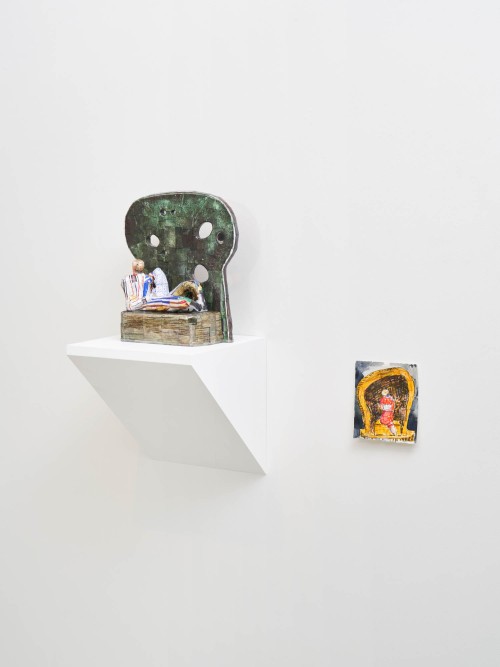
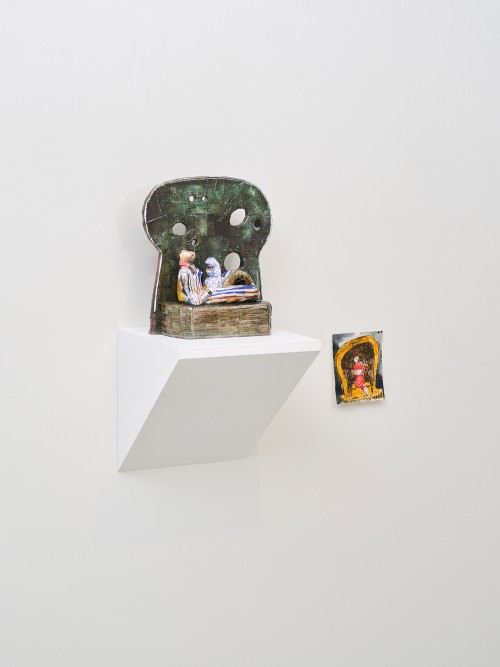
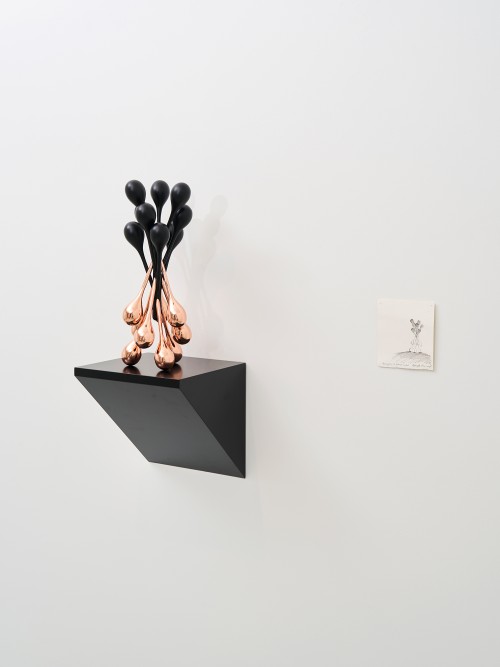
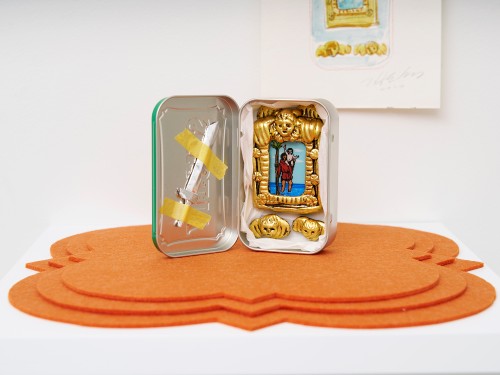
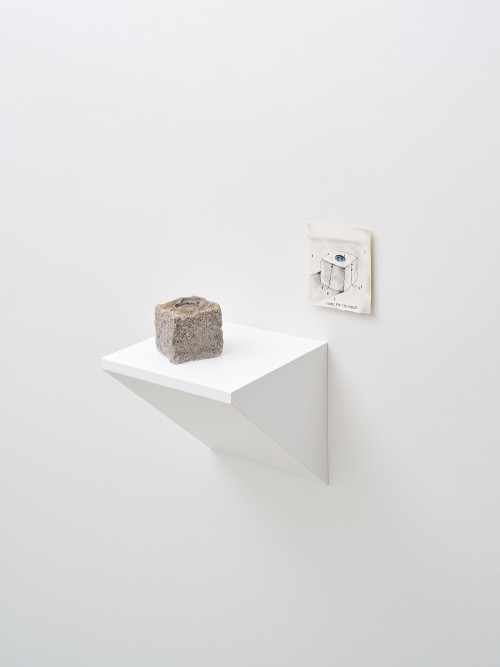
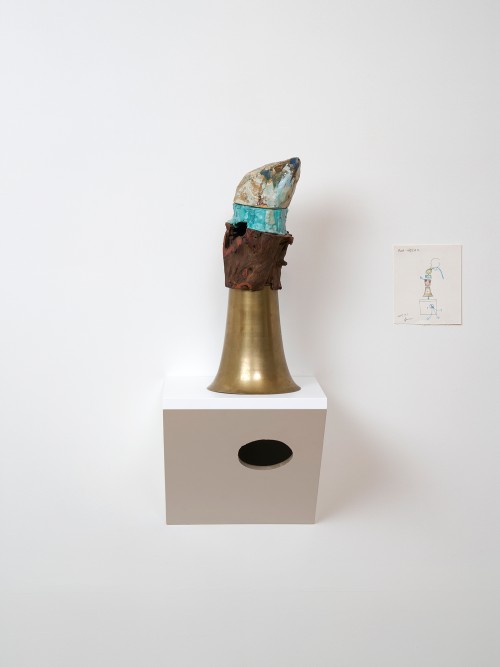
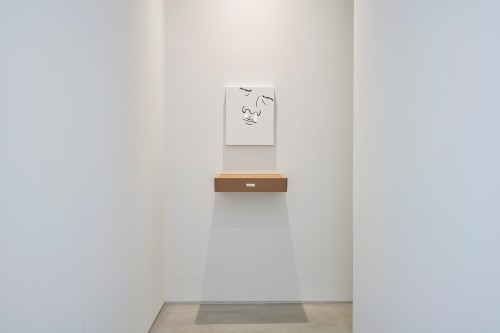
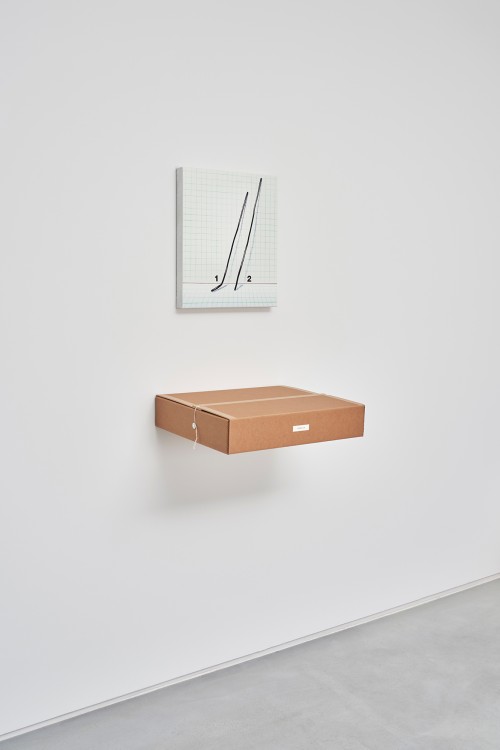
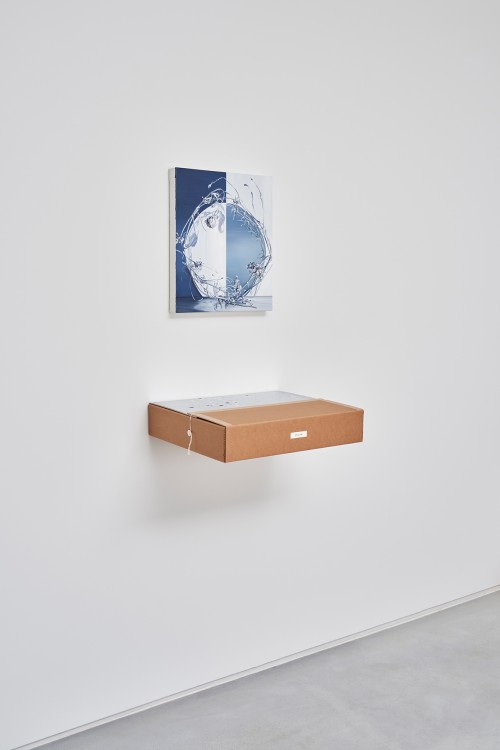
Before conceiving their individual work for the exhibition, each artist received an identical (11.5 x 11.5 in) wall mounted pedestal from the curators, each packed in an identical box, also intended to house the entirety of the work. As a prompt, they were encouraged to approach the confines of the plinth as an autonomous exhibition space. The resulting works are diverse in material and formal approach as well as scale - despite the fact that the primary constraint for the project inherently limits their size.

Several works in The Unboxing Project are deeply rooted in personal and collective memory around their Korean identity. Choong Sup Lim, having moved from Jincheon, Korea to New York, projects his “in-between” identity by utilizing the sparrow in his work, identifying with the bird that adapts to urban environments by altering its communication to higher octaves. Kim Yun Shin employs birch wood sourced from Yanggoo, Korea, near her hometown in North Korea, to thread the needle between nature and a personal art practice

Meekyoung Shin’s Toilet Project invites viewers to engage with sculptures that have been cast in soap and placed in museum restrooms for visitors to use. Transformed through human interaction, these objects are exhibited as new artifacts, blurring the boundaries between art and functional objects.

Gwon Osang and Jong Oh use the sculptural qualities of the pedestal to deconstruct its individual elements. Gwon constructs three-dimensional forms from two-dimensional photographs, generating spatial complexity from flat imagery. Jong Oh uses flexible materials like thread to craft minimalist works that engage directly with their surroundings. In this exhibition, Oh introduces mirrors into his work for the first time, transforming the viewer’s perception and engagement with space.

Yeesookyung’s Translated Vase series redefines conventional ideas perfection by assembling broken shards of Korean pottery that failed to meet traditional standards. Her meticulous reconstruction of these fragments with gold caulking argues for new systems of value.

Ultimately, the twenty-eight pedestals presented in this exhibition serve as a unifying framework to highlight the rich multiplicity of experiences and interactions that occur from studio to studio.

“모든 문명에서 가장 중요한 조각은 오히려 작다. 거의 모두. 이집트의 조각이든 선사 시대 조각이든 그것들은 대부분 거의 같은 크기이다. 그리고 나는 사실 그러한 크기가 직관적으로 가장 자연스럽고, 사람들이 실제로 보는 방식에 어울린다고 믿는다.”
— 알베르토 자코메티¹

Various Small Fires(VSF)와 언박싱 프로젝트(이하 UBP)는 2024년 11월 2일부터 12월 15일까지 세대를 망라하는 한국 현대미술의 대표 작가 28인이 UBP의 커미션을 받아 제작한 오브제 신작 28점으로 구성된 《UNBOXING PROJECT 3.2: Maquette(언박싱 프로젝트 3.2: 마케트)》를 미국 로스앤젤레스 VSF에서 개최한다. 2012년 LA 아트신의 중심지에 개관한 이래 탄탄한 역량을 갖춘 중견 갤러리로 자리매김해온 VSF는 작은 크기의 작품이 전하는 커다란 감동을 선보이며 고정관념을 깨는 시도를 이어온 UBP를 초대했다. 이번 전시는 서울에서 세 차례의 전시를 개최한 UBP의 첫 해외 전시이자 지난 4월 서울에서 열린 전시의 새로운 버전으로, VSF와의 협업을 통해 LA 아트신의 중심에서 한국 현대미술의 주요 작가들을 실험적이며 혁신적인 틀을 통해 소개한다.

전시 제목인 ‘마케트(maquette)’는 일반적으로 미술에서 조각 제작을 위한 예비 스케치를 의미한다. 조각을 어떠한 접근과 방법으로 만들지 구상하고, 구현될 결과를 예측하기 위해 제작하는 모형으로서 회화에 드로잉이 있다면 조각에서 마케트는 예술가의 아이디어가 일차적으로 투영되는 준비 단계로 여겨진다. 그러나 이번 전시는 스케치나 준비 단계로서의 마케트가 아니라, 대형 작품과 달리 조각가가 지닌 형태와 규모에 대한 인식을 오롯이 반영하고 작가의 신체적·감각적 개입으로 완성되는 작은 작품으로서의 의미를 강조하기 위해 역설적·상징적으로 ‘마케트’라는 제목을 붙였다.

조각을 통해 인간의 실존을 재현한 알베르토 자코메티(Alberto Giacometti)는 작은 크기의 작품을 규모에 대한 자신의 인식과 경험을 가장 잘 나타낼 수 있는 ‘자연스러운 크기(natural size)’라고 일컬은 바 있다. 이처럼 작은 오브제에 담길 수 있는 예술가의 물리적·개념적 감각과 응축된 작업 세계를 드러내기 위해 UBP는 특별히 고안한 틀을 박스에 넣어 전달하고, 한국 미술계에서 조각과 설치를 주요 매체로 활용하는 대표 작가 28인을 초대했다. 또한 단순히 크기가 작은 오브제를 제작하는 것이 아니라 새로운 차원의 시·공간을 내재한 작품을 만들기 위해, 프로젝트가 제공한 좌대를 독립적·자율적인 전시 공간으로 인식하고 작가의 ‘친밀한’ 개입을 통해 오히려 ‘거대한’² 오브제를 제작할 것을 의뢰했다.

그 결과 이번 전시는 참여 작가 28인이 기획 의도와 주제, 그리고 제시된 틀에 조응해 제작한 신작 28점을 선보인다. 예술가가 지닌 조각의 규모에 대한 경험과 해석을 담은 작품들은 새로운 시·공간성을 창출하며 크기를 초월하는 감동을 관객에게 전달한다. 작지만 커다란 이야기를 담은 작품을 통해 입체적 형(形)이 지닌 감각적·미학적·개념적·감성적 힘을 ‘자연스럽게, 직관적으로’ 경험하는 장을 연다.

UBP는 큐레이터 변현주와 아트 어드바이저 채민진이 기획한 프로젝트로, 압도적인 크기의 작품이나 스펙터클이 주는 ‘감탄’보다 작은 작품이 주는 마음을 움직이는(動) 감동이 때로는 더 오래, 더 깊이 각인되었던 경험을 반추하며 2022년 시작되었다. 프로젝트는 작은 박스에 들어가는 크기의 작품을 선보이며, 참여 작가에게 각 프로젝트의 주제에 부응하는 작품을 제한된 틀에 맞춰 제작하도록 커미션하고 박스를 전달한다. 이후 박스에 담긴 작가의 신작을 받아 언박싱하고 전시한다.

UBP는 예술의 물리적 이동성을 전시 프로세스 전면에 드러내고, 특정한 틀 안에서 만들어진 작품을 통해 개별 작가의 서로 다른 예술적 실천을 더욱 강조하며 전시 체계에 질문을 던지는 큐레토리얼 실험이기도 하다. 관객이 예술가의 작업 세계가 응축된 작은 크기의 작품 가까이 다가가도록 초대하는 이 프로젝트는 앞으로도 서로 다른 주제의 기획 전시를 통해 다양한 매체를 다루며 지속될 예정이다. 이번 미국 로스앤젤레스 VSF 전시에 이어 2025년 3월 독일 베를린에서 전시를 개최하는 등 프로젝트의 범위를 전 세계로 확장해 나가고자 한다.

3.1. Maquette

EXHiBiTiON DATES
VENUE
PARTiCiPATiNG ARTiSTS
10 April – 12 May 2024 2024년 4월 10일 – 5월 12일
New Spring Project, Seoul 뉴스프링프로젝트, 서울
Osang Gwon, Byoungho Kim, Inbai Kim, Hansaem Kim, Gimhongsok, Sunpil Don, Isaac Moon, Meekyoung Shin, Yang Jung Uk, Jong Oh, Donghoon Rhee, Yeesookyung, Wonwoo Lee, Eun Yeong Lee, Eunu Lee, Ahnnlee Lee, Hyunsoo Lee, Chung Seoyoung, Soyoung Chung, Jaiyoung Cho, Cha Sla, Goen Choi, Haneyl Choi, Han Kyungwoo, Sang A Han, Jiieh G Hur, Jungyoon Hyen 권오상, 김병호, 김인배, 김한샘, 김홍석, 돈선필, 문이삭, 신미경, 양정욱, 오종, 이동훈, 이수경, 이원우, 이은영, 이은우, 이안리, 이현수, 정서영, 정소영, 조재영, 차슬아, 최고은, 최하늘, 한경우, 한상아, 허지혜, 현정윤

“Across all civilizations, the most important sculptures are rather small. Almost all of them. Whether Egyptian sculptures or prehistoric sculptures, most are roughly the same size. And I believe that, in fact, this size is intuitively the most natural and corresponds to the way people actually see.”
— Alberto Giacometti

Following the first two exhibitions, which presented the profound impact that small-scale artworks can convey through painting, the third iteration of the project, UNBOXING PROJECT 3: Maquette, presents an exhibition composed of small objects.
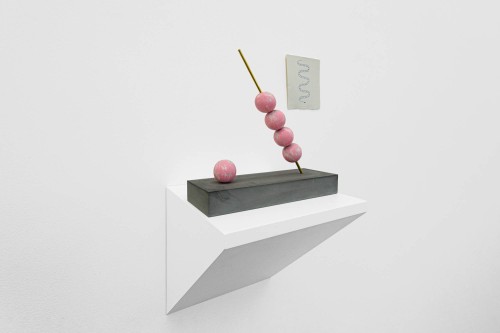
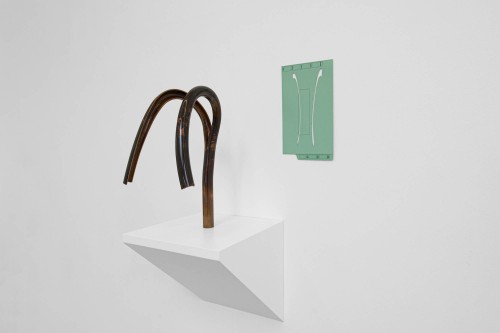
In the context of art, a maquette generally refers to a preliminary model for a sculpture, made as a means of envisioning the approach and method of its production and anticipating the form of the final work. If a drawing serves as a preparatory stage in painting, a maquette is similarly regarded in sculpture as an initial projection of an artist’s idea. This exhibition, however, adopts the title Maquette symbolically and paradoxically—not to denote a sketch or preparatory stage, but to emphasize the meaning of a small-scale work in its own right: a work that fully reflects a sculptor’s sense of form and scale and is completed through physical, bodily, and conceptual intervention, rather than serving as a preliminary study for a larger work.

Alberto Giacometti, who explored human existence through sculpture, referred to small-scale works as a “natural size,” a scale that best expressed his perception and experience of proportion. Unboxing Project, which commissions new works by sending artists a limited frame contained within a box, invited 27 leading artists in the Korean art scene who primarily work with sculpture and installation to explore the spatial and temporal sensibilities and condensed artistic worlds that can be contained within a small object.

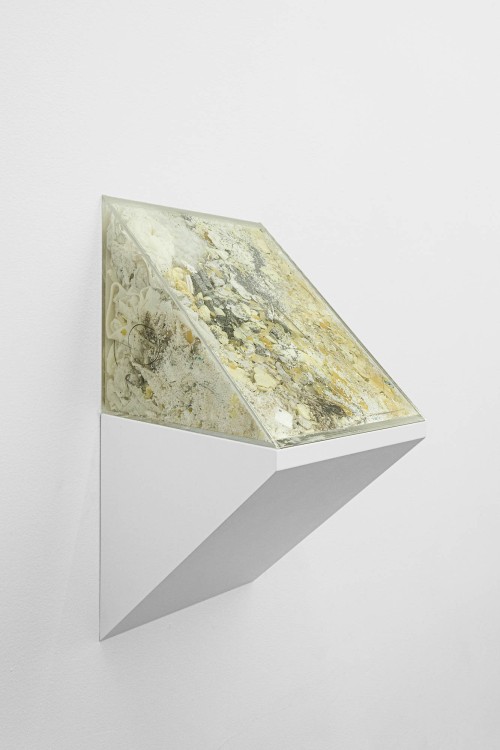
For this exhibition, each participating artist was provided with a specially designed pedestal, conceived as a kind of independent exhibition space, and invited to create an object that, while small in scale, could be “monumental” through the artist’s “intimate” intervention. The exhibition presents 27 new works created by the 27 participating artists in response to the project’s concept, theme, and prescribed framework. Reflecting each artist’s experience and interpretation of sculptural scale, these works generate new spatial and temporal dimensions, conveying an impact that transcends physical size. They are intended to open a space in which audiences can experience, “naturally and intuitively,” the sensory, aesthetic, and emotional power of three-dimensional form.

Now in its third iteration since its inaugural exhibition in 2022, UNBOXING PROJECT was conceived by curator Hyunju Byun and art advisor Minjin Chae. The project began by reflecting on experiences in which the impact of a small artwork remained longer and more deeply imprinted than the awe inspired by the overwhelming scale of a monumental work or spectacle. Each edition presents works small enough to fit inside a box: participating artists are invited to create works within a prescribed framework and in response to the theme of each project, which are then delivered and “unboxed” for exhibition.

UNBOXING PROJECT is also a curatorial experiment that foregrounds the physical mobility of art within the exhibition process. By presenting works created within a specific framework, it emphasizes the distinct artistic practices of individual artists while questioning conventional exhibition systems. Inviting audiences to come closer to small-scale works that encapsulate each artist’s world, the project will continue as an annual series of thematic exhibitions, exploring diverse media and subjects."

“모든 문명에서 가장 중요한 조각은 오히려 작다. 거의 모두. 이집트의 조각이든 선사 시대 조각이든 그것들은 대부분 거의 같은 크기이다. 그리고 나는 사실 그러한 크기가 직관적으로 가장 자연스럽고, 사람들이 실제로 보는 방식에 어울린다고 믿는다.”
— 알베르토 자코메티

작은 크기의 작품이 전하는 커다란 감동을 회화로 선보인 지난 두 번의 전시에 이어 세 번째 프로젝트 《UNBOXING PROJECT 3: Maquette (언박싱 프로젝트 3: 마케트)》는 작은 오브제로 이루어진 전시를 보여준다. 일반적으로 미술에서 마케트(maquette)란 조각 제작을 위한 예비 스케치로서 조각을 어떠한 접근과 방법으로 만들지 구상하고 구현될 결과를 예측하기 위해 만드는 모형을 뜻한다. 회화에 드로잉이 있다면 조각에서는 마케트가 예술가의 아이디어를 1차적으로 투영하는 준비 단계로 여겨진다. 하지만 이번 전시는 스케치나 준비 단계를 의미하는 마케트가 아닌, 대형 작품과 달리 조각가의 형태 및 규모에 대한 감각을 오롯이 반영하며 그의 물리적·신체적·개념적 개입으로 완성되는 작은 작품으로서 그 의미를 강조하기 위해 상징적·역설적으로 마케트란 제목을 붙인다.

조각으로 인간의 실존을 재현한 자코메티(Alberto Giacometti)는 작은 크기의 작품에 대해 규모에 대한 자신의 인식과 경험을 가장 잘 나타낼 수 있는 ‘자연스런 사이즈(natural size)’라 일컬은 바 있다. 작은 크기의 작품 제작을 위해 제한된 틀을 박스에 넣어 작가에게 보내며 새로운 작품을 커미션하는 《언박싱 프로젝트》는 이처럼 작은 오브제가 담을 수 있는 예술가의 시·공간적 감각과 응축된 작업 세계를 나타내기 위해 한국 미술계에서 조각 및 설치를 주요 매체로 활용하는 대표적 작가 27명을 초대했다.

이번 전시를 위해 특별히 제작한 좌대를 참여작가에게 제공하고 이를 일종의 독립적 전시 공간으로 인식하며 작지만 작가의 ‘친밀한’ 개입이 있기에 ‘거대한’² 오브제를 만들 것을 의뢰하였다. 그 결과 참여작가 27인이 기획 의도와 주제 및 틀에 조응해 만든 신작 27점을 선보인다. 예술가가 지닌 조각 규모에 대한 경험과 해석을 나타내는 전시작품은 새로운 시·공간성을 창출하며 크기를 초월하는 감동을 관객에게 전하고, 입체적 형(形)의 감각적·미학적·감성적 힘을 ‘자연스럽게 직관적으로’ 경험하는 장을 열 것이라 기대한다.

2022년 첫 전시 개최 후 세 번째를 맞이하는 《언박싱 프로젝트》는 큐레이터 변현주와 아트 어드바이저 채민진이 기획한 프로젝트로 압도적 크기의 작품이나 스펙터클이 주는 감탄보다 작은 작품이 전하는 감동이 때로는 더 오래, 더 깊이 각인되었던 경험을 반추하며 시작하였고, 작은 박스에 들어가는 크기의 작품을 선보인다. 참여작가에게 제한된 틀에 맞춰 각 프로젝트의 주제에 부응하는 작품을 제작하길 의뢰하며 전달하고, 작가의 신작을 언박싱하여 전시한다. 《언박싱 프로젝트》는 예술의 물리적 이동성을 전시 프로세스 전면에 드러내고 특정한 틀 안에서 만들어진 작품을 통해 개별 작가의 서로 다른 예술적 실천을 보다 강조하며 전시 체계에 대해 질문을 던지는 큐레토리얼 실험이기도 하다. 관객을 예술가의 작업 세계가 응축된 작은 크기의 작품으로 가까이 다가오도록 초대하는 이 프로젝트는 매해 다른 주제의 기획 전시로 다양한 매체를 다루며 지속될 예정이다.

2. Portable Gallery

EXHiBiTiON DATES
VENUE
PARTiCiPATiNG ARTiSTS
10 May – 4 June 2023 2023년 5월 10일 – 6월 4일
New Spring Project, Seoul 뉴스프링프로젝트, 서울
Ah Ra Kim, Kim Jiwon, Jin Hee Kim, Park Kiwon, Shinyoung Park, Seo Sang-ik, Suh Yongsun, Hyangro Yoon, Lee Kwang-Ho, Lee Dong Hyuk, Sojung Lee, Seung-taek Lee, Jinju Lee, Soojung Jung, Zuyoung Chung, Cho Minah, Pyoun Dae Sik 김아라, 김지원, 김진희, 박기원, 박신영, 서상익, 서용선, 윤향로, 이광호, 이동혁, 이소정, 이승택, 이진주, 정수정, 정주영, 조민아, 편대식

"The second iteration of the project, UNBOXING PROJECT 2: Portable Gallery, takes as its theme the idea of a “Portable Gallery,” drawing on Marcel Duchamp’s La Boîte-en-valise (1935–1966), or “Portable Museum.”

Marcel Duchamp expanded the conceptual boundaries of modern art through works such as the readymade Fountain (1917) and L.H.O.O.Q. (1919), his appropriation of the Mona Lisa, while producing numerous replicas of his works. Beginning in 1935, he created La Boîte-en-valise, a “Portable Museum” comprising miniature reproductions of his paintings, drawings, objects, and readymades. Reflecting on the process, Duchamp once remarked that “it was much easier and more fun to collect things that represented my life than to paint something new.” Inspired by this idea, UNBOXING PROJECT 2: Portable Gallery asks why Duchamp found greater pleasure in assembling a collection of meticulously reproduced miniature works than in creating something entirely new, and why artists reproduce or appropriate their own existing works. The project seeks to trace the new trajectories of creation that emerge through such variations and transformations.

For this exhibition, 17 participating artists—including established and mid-career figures in the Korean art scene as well as emerging artists—were invited to reflect on their artistic practices and create miniature “Portable Galleries.” They were given not only the freedom to reproduce and transform their own works, but also to appropriate works by other artists as a form of homage and create a collection of their own. Six micro-canvases were placed in a box and delivered to each artist, who was asked to create a work comprising six pieces that held personal significance to them—at once a “small solo exhibition,” a collection, and a “Portable Gallery.” Each “Portable Gallery” condenses the artist’s practice into miniature form while simultaneously becoming a collection of works that serve as sources of inspiration and origins of their creative practice, ultimately presenting an exhibition space that reflects the artist’s artistic world.

At the same time, the exhibition foregrounds the physical mobility of art by focusing on the process through which the works are delivered in boxes and subsequently unboxed, transforming this process into an integral part of the exhibition’s concept. It is also a curatorial inquiry into the exhibition system revealed when diverse artistic practices are presented within a predetermined framework, as well as an experiment in a mise-en-abyme-like exhibition structure in which the “Portable Galleries” curated by the artists themselves are, in turn, curated within the exhibition. The 17 “Portable Galleries” will be unboxed and presented in the exhibition before being placed back into their boxes and delivered to collectors, carrying with them the pleasure of unboxing.

The second iteration of the project following its inaugural exhibition in 2022, UNBOXING PROJECT 2: Portable Gallerywas initiated by curator Hyunju Byun and art advisor Minjin Chae from the idea that the anticipation of opening a box, and the care and emotion conveyed through it, closely resemble the experience of encountering an artwork in an exhibition. By highlighting the paradoxical potential of small artworks emerging from a box to evoke profound emotional impact, the project invites viewers to encounter miniature canvases in which each artist’s practice is condensed. 《UNBOXING PROJECT》 will continue as an ongoing series of thematic exhibitions, expanding beyond two-dimensional works to encompass objects and works in diverse media."

"이번 두 번째 프로젝트 《UNBOXING PROJECT 2: Portable Gallery(언박싱 프로젝트 2: 이동하는 갤러리)》는 마르셀 뒤샹(Marcel Duchamp)의 〈슈트케이스 안의 박스(La Boîte-en-valise)〉(1935–1966), 즉 ‘이동하는 미술관(Portable Museum)’을 차용한 ‘이동하는 갤러리’란 주제로 펼쳐진다.

마르셀 뒤샹은 레디메이드 〈샘(Fountain)〉(1917), 모나리자를 전유한 〈L.H.O.O.Q.〉(1919) 등을 발표, 현대미술의 개념을 확장시키며 수많은 레플리카(replica)를 만들었고, 1935년부터 자신의 회화, 드로잉, 오브제, 레디메이드 작업을 미니어처 버전으로 복제한 ‘이동하는 미술관’인 〈슈트케이스 안의 박스〉를 제작했다. 그는 이 시리즈를 만들며 “새로운 무언가를 그리는 대신에 내 인생을 나타내는 것을 모으는 게 훨씬 쉬웠고 더 재미있었다”고 그 즐거움을 고백한 바 있다. 여기에서 영감을 받은 《UNBOXING PROJECT 2: Portable Gallery》는 왜 뒤샹은 정교하게 복제된 미니어처 작품들의 모음을 만들며 새로운 무언가를 그리는 것보다 더 재밌다고 말했는지, 왜 작가들은 자신의 기존 작업을 복제하고 전유하는지에 대해 질문을 던지며, 이러한 작업의 변주가 그려내는 새로운 창작의 궤적을 재현해보려 한다.

이번 전시는 한국 미술계의 주요한 원로 및 중견 작가부터 주목받는 신진을 포함한 참여작가 17명에게 스스로의 예술 실천을 돌아보고 자신의 작품을 복제 및 변주하는 것뿐만 아니라, 더 나아가 오마주(homage)로서 다른 작가의 작품을 전유해 그만의 컬렉션을 만드는 것까지 허용하며, 미니어처 ‘이동하는 갤러리’를 제작할 것을 의뢰했다. 6개의 마이크로 캔버스를 상자에 넣어 작가에게 전달했고, 참여작가는 그에게 의미 있는 작품 6점으로 구성된 일종의 ‘작은 개인전’이자 컬렉션, ‘이동하는 갤러리’로 만든 작품을 출품 및 전시한다. ‘이동하는 갤러리’는 참여작가의 작업 세계를 미니어처 버전으로 응축해 보이는 동시에 작가의 창작의 근원이자 영감이 되는 작품들의 컬렉션이 되어 궁극적으로 그의 예술 실천을 재현하는 전시장을 보여준다.

한편, 이번 전시는 박스를 통해 작품을 전달하고 언박싱하는 과정에 주목해 예술의 물리적 이동성을 전시 프로세스 전면에 드러내며 전시 개념으로 전환하는 큐레토리얼 시도이자 제한된 틀로 다양한 작가들을 선보일 때 드러나는 전시 체계에 대한 질문이고, 작가가 ‘큐레이팅’해 만든 ‘이동하는 갤러리’를 다시 큐레이팅하는 액자식 전시 구조 실험이기도 하다. 참여작가 17명의 ‘이동하는 갤러리’는 언박싱되어 전시되고, 다시 박스에 넣어져 컬렉터에게 언박싱의 즐거움과 함께 전해질 것이다.

2022년 첫 프로젝트에 이어 두 번째로 열리는 《UNBOXING PROJECT 2》는 언박싱할 때 갖는 기대와 박스를 통해 전해진 마음과 감동이 전시에서 미술작품을 마주하는 경험과 유사하다는 점에서 착안해 큐레이터 변현주와 아트 어드바이저 채민진이 시작한 프로젝트로 박스에서 나온 작은 미술작품이 오히려 커다란 감동을 전할 수 있다는 점을 역설적으로 드러내며 작가의 작업 세계가 응축된 작은 캔버스로 관객을 초대한다. 프로젝트는 이후 다른 주제의 기획 전시로, 평면 작업뿐 아니라 오브제 및 다양한 매체의 작업을 다루며 지속될 예정이다."

1. Today

EXHiBiTiON DATES
VENUE
PARTiCiPATiNG ARTiSTS
6 – 30 April 2022 2022년 4월 6일 – 4월 30일
New Spring Project, Seoul 뉴스프링프로젝트, 서울
Sejin Kwon, Meeyoung Kim, Suyeon Kim, Eunjoo Rho, Yun-Hee Toh, Kwantaeck Park, Park Gwangsoo, MeeNa Park, Sen Chung, Shin Shin, Ahn Kyuchul, Yang Jiwon, Eom Yu Jeong, Yeonjin Oh, Jeongsu Woo, Yoo Geun-Taek, Yoo Seungho, Kalim Yoon, Woosung Lee, Eunsae Lee, Jaeseok Lee, Hyein Lee, Hong Seung-Hye 권세진, 김미영, 김수연, 노은주, 도윤희, 박관택, 박광수, 박미나, 샌정, 신신, 안규철, 양지원, 엄유정, 오연진, 우정수, 유근택, 유승호, 윤가림, 이우성, 이은새, 이재석, 이혜인, 홍승혜

"I hope other people will like my paintings. And yet I keep thinking, rather hopelessly, about what good a painting quietly hanging on a wall can possibly do in the world today." — Text inscribed on Yiso Bahc's drawing Untitled (1986)

This brief text, inscribed on a small drawing by Yiso Bahc, is one that might be encountered in an exhibition space or catalogue. The work resonates deeply, articulating emotions that those who practice art often experience, and serves as a touchstone whenever one reflects on the power of art. Today, we live in a performance-driven society, pushing ourselves to achieve more while looking toward the future rather than the present in an effort to keep pace with a rapidly changing world. In an era in which change is accelerating even more rapidly than during Bahc’s lifetime, what kind of power can art hold? Yet, just as a modest artwork can leave an enduring impression of comfort and solace, perhaps we must continue to convey something through art nonetheless.

UNBOXING PROJECT was conceived as an opportunity to turn our attention back to the everyday values that we so easily overlook and to consider the profound emotions that can be conveyed by small-scale artworks. We live amid a reality marked by war, climate change, and global pandemics that have led us to question the sustainability of humanity, as well as discrimination and injustice against minorities. In such circumstances, it is of course important to engage with grand narratives of change and to speak of new worlds that art alone can imagine. Yet, just as we may feel overwhelmed when confronted with monumental works, while finding ourselves moved when we draw close to a small artwork, perhaps it is art’s small gestures that can transform an individual’s life and values. It is with this belief that Unboxing Project began.

The project thus takes “Today” as its first theme. In UNBOXING PROJECT: Today, “Today” is not so much a diagnosis of the times as it is the everyday and the present that we so easily overlook—the most condensed expression of time that an artist seeks to convey to the viewer. Much like On Kawara, who recorded his own “today” by transforming places, times, and events into works created and completed on the very day they occurred, while also incorporating local newspaper clippings into his practice, an artist’s “today” is a record of existence and a form of temporality that can transcend its own era, observed and recorded by one of its most perceptive witnesses.

For UNBOXING PROJECT: Today, custom boxes and 45.5 × 37.9 cm canvases were specially produced for the exhibition. An empty canvas was placed inside each box and delivered to the participating artists, who were invited to fill it with their own “today”—what they wished to convey to the viewer. At the same time, by focusing on the act of delivering an artwork within a box, the project foregrounds the physical mobility of art and the process of its transmission, transforming these processes into the very concept of the exhibition and experimenting with the conventions of exhibition-making.

The “today” conveyed by each participating artist is unboxed within the exhibition, inviting viewers to come closer and encounter the emotion and resonance that a small-scale artwork can evoke. Unboxing Project will continue as a series of thematic exhibitions, expanding beyond two-dimensional works to include objects and works in a range of media.

“그림이 딴 사람들 맘에 들었으면 하고 생각한다. 그러면서도 요즘 세상에 가만히 벽에 붙은 그림이 뭘 할 수 있을까 하며 자꾸 한심해 한다.” - 박이소의 드로잉 〈무제〉(1986)에 쓰인 글

언젠가 전시장에서 혹은 전시도록에서 본 박이소 작가의 작은 드로잉에 쓰인 짧은 글이다. 예술을 실천하는 이가 가질 수 있는 감정을 공감하게 하고 깊은 울림을 주었던 이 작업은 예술의 힘이 무엇인지 고민할 때 마음속에서 꺼내어 보는 작업이다. 오늘날 우리는 성과중심적 사회에서 더욱 성취하기 위해 스스로를 혹사시키고, 시대에 뒤떨어지지 않고 나아가려 현재가 아닌 미래를 바라보며 살아간다. 그가 살았던 시대보다 변화가 가속된 이 시대에 예술은 어떤 힘이 있을까. 하지만 작가의 작은 미술작품이 위로와 감동을 각인시켰듯 그럼에도 불구하고 우리는 계속 예술로 전해야 하지 않을까. 《언박싱 프로젝트》는 일상의 가치를 지나치며 사는 우리를 되돌아보고, 작은 크기의 미술작품이 전할 수 있는 깊은 감동에 주목하기 위해 기획되었다. 세계의 한편에서는 전쟁이 일어나고, 기후 변화와 전 세계적 전염병을 겪으며 인류의 지속가능성을 의심하게 하는 환경에서, 우리는 소수자를 향한 차별과 부조리함이 가득한 현실을 맞닥뜨리며 살고 있다. 이러한 상황에서 변화를 위한 거대담론을 논하며 예술만이 꿈꿀 수 있는 새로운 세계에 대해 말하는 것은 물론 중요하다. 그렇지만 거대한 작품을 마주할 때 삶으로 이어지는 감동을 느끼기보다 쉬이 압도되고 가까이 다가가 보는 작은 미술작품에 마음이 움직이듯이, 어쩌면 한 사람의 삶과 가치관을 변화시키는 것은 예술의 작은 제스처일 수 있다는 믿음에서 이 프로젝트를 시작한다.

그리하여 프로젝트는 첫 번째 주제로 ‘오늘’을 말한다. 《언박싱 프로젝트: 오늘》에서 말하는 ‘오늘’은 시대상의 진단이라기보다 우리가 쉽게 지나치는 일상과 현재이자 작가가 관객에게 전달하려는 가장 응축된 시간이다. 또한 자신의 오늘을 기록하기 위해 존재한 장소와 시간, 사건을 작업으로 만들며 그날 안에 완성하고 지역 신문을 함께 스크랩하며 실천을 해온 온 카와라(On Kawara)처럼, 작가의 ‘오늘’은 가장 예리하고 날카로운 관찰자인 예술가가 기록하는, 시대를 초월해 전할 수 있는 시간성이자 존재의 기록이다. 《언박싱 프로젝트: 오늘》은 작가의 ‘오늘’과 그의 작업 세계가 응축된 화면을 전하기 위해 이번 전시를 위한 박스와 45.5 x 37.9 cm 크기의 캔버스를 특별히 제작한 후, 박스 안에 빈 캔버스를 넣어 참여 작가들에게 전달하며 관객에게 전하고 싶은 ‘오늘’을 담아줄 것을 의뢰했다. 한편, 박스 안 작품을 전달하는 것에 주목하며 예술의 물리적 이동성과 전달 프로세스를 전면에 드러내면서 전시의 개념 그 자체로 전환해 전시 체계를 실험한다. 참여 작가들이 전하는 ‘오늘’은 전시에서 언박싱되고, 관객이 작은 크기의 미술작품이 주는 감동과 울림을 가까이 다가와 마주하도록 초대한다. 언박싱 프로젝트는 이후 다른 주제의 기획 전시로, 평면 작업뿐 아니라 오브제 및 다양한 매체의 작업을 다루며 지속될 예정이다.